

Maintaining clean and properly sanitized swimming pool water can be challenging, particularly in outdoor pools exposed to direct sunlight. Ultraviolet (UV) radiation gradually breaks down free chlorine, reducing the amount available to control bacteria, algae, and other microorganisms. Without appropriate water management, pool operators may need to replenish chlorine frequently to maintain suitable sanitation levels.
A Pool Stabilizer helps address this challenge by protecting chlorine from rapid degradation caused by sunlight. Also known as cyanuric acid, this chemical is commonly used in outdoor swimming pools to improve chlorine stability and support more consistent sanitation. However, the correct concentration is essential because excessive stabilizer can reduce chlorine effectiveness. Understanding how it works, how to monitor it, and how it interacts with other water chemistry parameters helps pool owners maintain better water quality.
What Is a Pool Stabilizer?
A pool stabilizer is a chemical used to reduce the rate at which sunlight degrades free chlorine in swimming pool water. The most common stabilizer is cyanuric acid, which is also called chlorine stabilizer or conditioner.
When cyanuric acid is present in pool water, it forms a reversible association with chlorine. This reduces the rate of chlorine loss caused by UV exposure while maintaining a reservoir of chlorine that can become available as conditions change.
Pool stabilizer is particularly useful in outdoor swimming pools because these systems receive continuous sunlight during daylight hours.
Common characteristics include:
- Helps protect free chlorine against UV degradation.
- Supports more consistent chlorine levels in outdoor pools.
- Reduces chlorine consumption caused by sunlight exposure.
- Is available in granular and other commercial formulations.
- Requires regular testing to prevent excessive accumulation.
- Works alongside chlorine products rather than replacing them.
A stabilizer does not disinfect pool water by itself. Its purpose is to support the performance of chlorine-based sanitation.
Why Does Outdoor Pool Chlorine Need Protection?
Sunlight is one of the major factors affecting chlorine stability in outdoor swimming pools. UV radiation can break down free chlorine, reducing the concentration available for disinfection.
This process can create several maintenance challenges.
Faster Chlorine Loss
Outdoor pools exposed to strong sunlight may lose chlorine more quickly than indoor pools. The rate of loss depends on sunlight intensity, water conditions, chlorine concentration, and stabilizer levels.
Without suitable protection, operators may need to add chlorine more frequently.
Increased Chemical Consumption
Frequent chlorine replacement can increase operating costs. This is especially relevant for commercial swimming pools, hotels, recreational facilities, and other venues with large water volumes.
A suitable stabilizer concentration can help reduce sunlight-related chlorine consumption and support more efficient chemical management.
Greater Difficulty Maintaining Sanitation
If chlorine levels decline too quickly, the pool may become harder to maintain within its recommended sanitation range. Regular testing and appropriate stabilizer management help operators respond to changing conditions.
How Does Pool Stabilizer Work?
Cyanuric acid helps protect chlorine by forming a reversible association with free chlorine in water. This reduces the amount of chlorine exposed to rapid UV degradation.
The relationship between stabilizer and chlorine is important because chlorine must remain available to provide disinfection.
Protection Against UV Radiation
When sunlight reaches untreated pool water, UV radiation can rapidly break down chlorine. Cyanuric acid reduces this process, helping maintain a more stable chlorine supply.
Supporting Chlorine Availability
Stabilizer does not permanently bind chlorine or eliminate its disinfecting function. Instead, it establishes a balance between chlorine associated with cyanuric acid and chlorine available in the water.
This balance allows chlorine to remain available over time, although higher stabilizer concentrations generally require careful chlorine management.
Reducing Frequent Chlorine Replacement
By slowing UV-related chlorine loss, an appropriate stabilizer level can reduce the need for repeated chlorine additions.
The actual reduction depends on sunlight exposure, pool usage, water chemistry, and the sanitation system.
Common Types and Forms of Pool Stabilizer
Cyanuric acid is available in different commercial forms. The most suitable option depends on the pool’s size, maintenance procedures, and dosing requirements.
Granular Cyanuric Acid
Granular stabilizer is commonly used in swimming pool maintenance. It can be measured according to pool volume and prepared following the manufacturer’s instructions.
Its advantages include:
- Convenient measurement.
- Flexible quantity adjustment.
- Practical storage in suitable packaging.
- Compatibility with many established pool maintenance procedures.
Granules may take time to dissolve completely. Operators should follow product instructions and avoid adding undissolved material directly where it could damage pool surfaces.
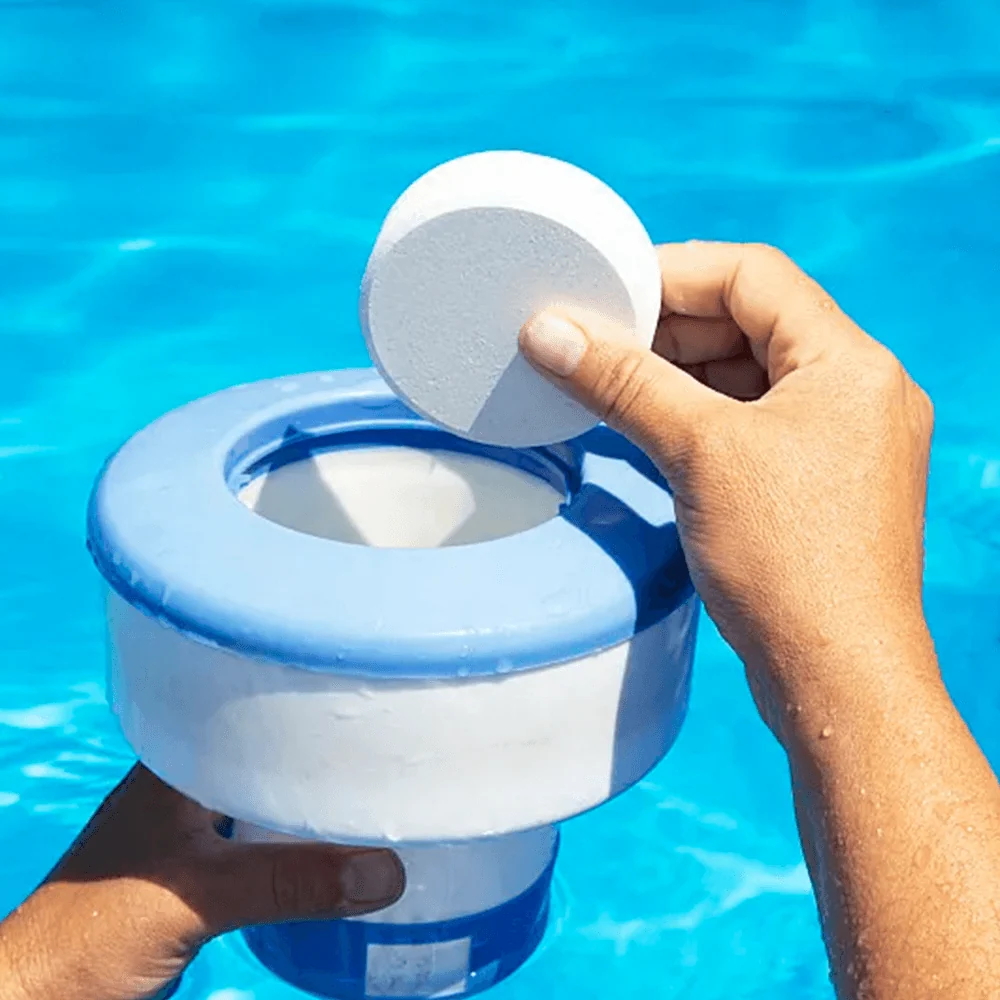
Stabilizer Tablets
Some suppliers offer stabilizer products in compressed tablet form. Their dissolution characteristics depend on formulation, tablet size, and water conditions.
Users should confirm that the product is specifically designed for stabilizer dosing and is compatible with the intended equipment.
Stabilizer-Containing Chlorine Products
Certain stabilized chlorine disinfectants, including trichloroisocyanuric acid and sodium dichloroisocyanurate, contribute cyanuric acid as they dissolve.
This means pool operators using these products should account for stabilizer accumulation as part of their ongoing water chemistry management.
Recommended Stabilizer Levels and Water Testing
Maintaining an appropriate cyanuric acid concentration is essential. Too little stabilizer may provide insufficient protection against sunlight, while excessive levels can reduce chlorine effectiveness.
The appropriate target depends on local pool standards, the type of pool, and the sanitation system. Many conventional outdoor pool maintenance programs use a cyanuric acid range around 30–50 ppm, but operators should follow applicable local guidance and product instructions.
Testing Cyanuric Acid
Pool owners should use a suitable test kit or professional water-testing service to measure stabilizer concentration.
Testing is particularly important when:
- A pool uses stabilized chlorine products regularly.
- Chlorine consumption patterns change unexpectedly.
- Fresh water is added or a substantial amount is drained.
- The pool experiences heavy use.
- Water chemistry becomes difficult to maintain.
Monitoring Free Chlorine Alongside Stabilizer
Cyanuric acid should never be evaluated in isolation. Operators must also monitor free chlorine because stabilizer concentration affects how chlorine behaves in water.
As stabilizer levels increase, a higher free chlorine concentration may be needed to achieve the same disinfection performance. The appropriate relationship should be determined using recognized pool standards and professional guidance.
Managing Excessive Stabilizer
Cyanuric acid does not readily disappear through normal pool filtration or evaporation. If its concentration becomes too high, partial draining and replacement with fresh water may be necessary, subject to local regulations and water-management requirements.
Simply adding more chlorine may not resolve the underlying problem.
Benefits of Using Pool Stabilizer
When applied correctly, pool stabilizer offers several practical advantages for outdoor pool maintenance.
1. Reduced UV-Related Chlorine Loss
The main benefit is protection against sunlight-related chlorine degradation. This helps maintain more consistent chlorine availability during periods of strong sunlight.
2. More Efficient Chemical Management
Reducing unnecessary chlorine loss can help lower chemical consumption. This may be particularly useful for facilities that maintain large outdoor pools.
3. Support for Consistent Water Sanitation
By helping chlorine remain available for longer, stabilizer can support a more consistent sanitation program when combined with correct dosing and regular testing.
4. Convenient Use with Established Chlorine Systems
Cyanuric acid can be incorporated into many outdoor pool maintenance programs, including systems that use unstabilized chlorine products.
Operators must account for any stabilizer already contributed by their chosen chlorine disinfectant.
5. Better Maintenance Planning
Monitoring stabilizer levels gives pool operators a clearer understanding of chlorine demand and chemical balance. This can improve maintenance scheduling and purchasing decisions.
Pool Stabilizer Compared with Stabilized Chlorine Products
Although cyanuric acid and stabilized chlorine products are closely related, they serve different functions.
| Product | Primary function | Main consideration |
|---|---|---|
| Cyanuric acid stabilizer | Protects chlorine against UV degradation | Does not disinfect independently |
| Trichlor | Supplies available chlorine and contributes stabilizer | Tends to lower pH and increase cyanuric acid |
| Dichlor | Supplies available chlorine and contributes stabilizer | Adds cyanuric acid during repeated use |
| Sodium hypochlorite | Supplies unstabilized available chlorine | Does not add cyanuric acid |
| Calcium hypochlorite | Supplies unstabilized available chlorine | Adds calcium to pool water |
The choice depends on existing water chemistry, chlorine requirements, and the desired level of stabilizer control.
For example, a pool using trichlor regularly may already receive enough cyanuric acid through its sanitizer. Adding separate stabilizer without testing could lead to excessive accumulation.
How to Choose a Quality Pool Stabilizer
Product quality and clear specifications are important when purchasing cyanuric acid for residential or commercial pools.
Check Chemical Purity
Review the product specification to confirm that the material meets the requirements of the intended application. Purity and other quality parameters should be supported by appropriate technical documentation.
Examine Physical Form
Granular products should have suitable particle characteristics for the intended preparation process. If purchasing tablets, confirm their dimensions and compatibility with the relevant dosing system.
Request a Certificate of Analysis
A certificate of analysis provides batch-specific quality information. It can help buyers verify product conformity and maintain purchasing records.
Review Packaging
Packaging should protect the stabilizer from moisture and contamination. Clearly labeled containers with secure closures are preferable for storage and transport.
Evaluate Supplier Reliability
Commercial buyers should consider production consistency, delivery schedules, technical support, and the supplier’s ability to provide documentation for repeat orders.
Correct Application and Handling Practices
Using stabilizer correctly is important for achieving the intended water-treatment benefits.
- Test the existing cyanuric acid concentration before adding more product.
- Calculate the required quantity according to pool volume and the manufacturer’s instructions.
- Follow the recommended preparation and application method.
- Allow sufficient time for the product to dissolve and circulate.
- Retest the water before making additional adjustments.
- Monitor free chlorine and pH alongside stabilizer concentration.
- Avoid adding excessive quantities in an attempt to improve chlorine protection.
Cyanuric acid products should be stored in suitable containers and handled according to their safety documentation. Workers should use appropriate protective equipment and avoid inhaling dust during handling.
Common Pool Stabilizer Mistakes to Avoid
Incorrect stabilizer management can make pool sanitation more difficult. Pool operators should be aware of several common mistakes.
Adding stabilizer without testing: Existing cyanuric acid levels should be measured before additional product is introduced.
Ignoring stabilized chlorine contributions: Regular trichlor or dichlor use can gradually increase cyanuric acid concentration.
Assuming more stabilizer is always better: Excessive cyanuric acid can reduce chlorine effectiveness and complicate sanitation management.
Monitoring chlorine without checking stabilizer: Free chlorine readings should be interpreted in the context of cyanuric acid concentration.
Expecting filtration to remove stabilizer: Ordinary pool filtration does not effectively remove dissolved cyanuric acid.
Neglecting regular water testing: Changes in pool use, weather, and chemical consumption can affect water balance.
Avoiding these mistakes helps maintain a more predictable and effective sanitation program.
Conclusion
Pool stabilizer plays an important role in outdoor swimming pool maintenance by helping protect free chlorine from rapid degradation caused by sunlight. Cyanuric acid provides this protection through a reversible association with chlorine, supporting more consistent sanitation and potentially reducing unnecessary chlorine consumption.
However, stabilizer must be managed carefully. Excessive cyanuric acid can reduce chlorine effectiveness, particularly when operators fail to adjust their sanitation practices accordingly. Regular testing of stabilizer, free chlorine, and pH is therefore essential.
For residential pool owners and commercial facility managers, the best approach is to select a suitable stabilizer product, follow accurate dosing procedures, and monitor water chemistry consistently. With balanced chemical management, pool stabilizer can support effective chlorine performance and help maintain cleaner outdoor swimming water.