
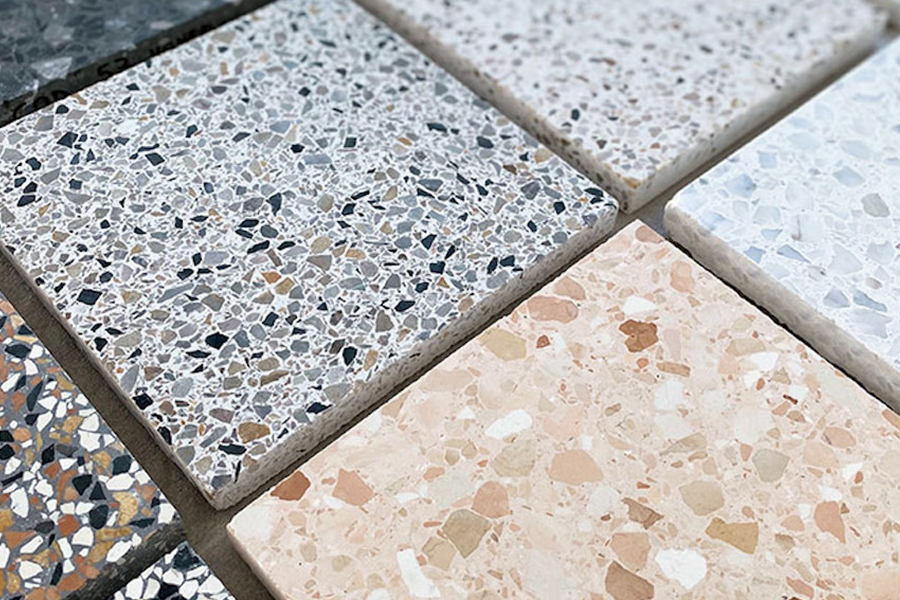

Unglazed tiles are widely used in architectural and interior design projects where practical surface characteristics, natural textures, and understated aesthetics are important. Unlike glazed tiles, which receive an additional glass-like coating, unglazed tiles retain the surface of the ceramic or porcelain body itself. This gives them a distinctive appearance and makes their composition and manufacturing process especially important to their final performance.
Understanding how an Unglazed Tiles Factory produces these materials helps buyers evaluate product quality beyond color and appearance. Raw material selection, body preparation, forming, firing, surface finishing, and inspection all contribute to the characteristics of the finished tile. For architects, contractors, distributors, and property developers, knowing these production stages can support more informed purchasing decisions.
1. What Are Unglazed Tiles?
Unglazed tiles are ceramic or porcelain products that do not receive a separate glaze layer on their surface. Their visible finish comes directly from the fired body, which may be left natural, polished, honed, or textured depending on the manufacturing method.
Because the surface is not covered by a decorative glaze, the material composition and production consistency have a direct influence on its appearance and physical characteristics.
Common features of unglazed tiles include:
- Natural ceramic or porcelain surface characteristics
- A variety of matte, textured, honed, or polished finishes
- Color and pattern options determined by the body composition
- Suitability for selected residential and commercial applications
- Different levels of durability and surface performance depending on the product
Unglazed tiles are available in various formulations. Some are designed for decorative wall applications, while others are manufactured for demanding flooring environments. Buyers should check the product’s technical specifications rather than assuming all unglazed tiles have the same performance.
2. Raw Material Selection and Composition
The composition of an unglazed tile is one of the most important factors affecting its quality. Manufacturers select and combine mineral materials to achieve the required forming behavior, firing characteristics, color, and physical properties.
Common raw materials include:
Clay: Provides plasticity during forming and contributes to the ceramic body’s structure.
Feldspar: Functions as a flux during firing, helping develop the desired ceramic structure.
Quartz: Helps control shrinkage and influences the body’s physical characteristics.
Mineral pigments: May be added to achieve particular body colors or decorative effects.
Other mineral additives: Can be used to adjust processing behavior and product properties.
The exact formulation varies according to the intended product. A consistent raw material supply and accurate batching help reduce variations between production runs.
3. Preparing the Ceramic Body
Before tiles can be formed, raw materials must be processed into a suitable production mixture. This stage helps establish the uniformity required for consistent dimensions and surface characteristics.
A typical preparation process may include:
- Measuring raw materials according to the product formulation.
- Grinding and mixing materials to achieve a consistent composition.
- Preparing a slurry when wet processing is used.
- Spray drying to produce powder with controlled moisture content.
- Storing and conditioning the prepared material before forming.
The quality of this preparation influences later manufacturing stages. Uneven particle distribution or inconsistent moisture levels can affect pressing, drying, and firing results.
4. Forming and Pressing Techniques
Once the ceramic body material is ready, it is shaped into tiles using suitable industrial forming equipment. Dry pressing is commonly used in ceramic tile production because it allows manufacturers to produce tiles with controlled dimensions and repeatable shapes.
During pressing, prepared powder is placed into a mold and compressed under controlled pressure.
Important factors include:
- Powder moisture content
- Particle size distribution
- Pressing pressure
- Mold condition
- Forming cycle consistency
- Target tile thickness
Proper forming helps create a stable body for subsequent drying and firing. Inconsistent pressure or material distribution may lead to density differences, dimensional variations, or defects that become visible later.
5. Drying and Firing Processes
After forming, tiles typically undergo drying to remove excess moisture before entering the kiln. Controlled drying helps reduce the risk of cracks and deformation during firing.
Firing is a critical stage because it develops the ceramic body’s final structure and physical properties.
Manufacturers must manage several process variables, including:
- Kiln temperature
- Heating and cooling rates
- Firing duration
- Temperature distribution
- Tile spacing and movement through the kiln
The correct firing conditions depend on the raw material formulation and product specifications. Insufficient or excessive firing can affect density, strength, color, shrinkage, and water absorption.
Consistent kiln operation helps manufacturers maintain more predictable results across production batches.
6. How Unglazed Tile Texture Is Created
Texture is one of the defining characteristics of many unglazed tiles. Because there is no separate glaze layer covering the body, manufacturers use different forming and finishing methods to create the desired surface appearance.
Natural Matte Texture
Some unglazed tiles retain a relatively natural surface after firing. This can produce a simple, understated appearance that works well in contemporary and traditional interiors.
Structured Texture
Manufacturers may use textured molds or surface treatments to create patterns, ridges, or other tactile details. These finishes can add visual depth and may be designed for particular functional requirements.
Polished and Honed Surfaces
Certain unglazed porcelain products undergo grinding and polishing to create a smoother surface. The resulting finish can reveal the material’s internal structure and decorative characteristics.
Textured Stone-Look Finishes
Some products are designed to reproduce the appearance of natural stone. Surface variations and body coloration help create a more natural visual effect.
Buyers should examine physical samples to understand the texture and appearance of the finished product. They should also request slip-resistance information when selecting tiles for flooring.
7. Differences Between Glazed and Unglazed Tiles
Understanding the distinction between glazed and unglazed tiles helps buyers choose the right material for each project.
| Feature | Glazed Tiles | Unglazed Tiles |
|---|---|---|
| Surface | Covered with a glaze layer | Surface is formed by the ceramic body |
| Appearance | Wide range of decorative glaze effects | Appearance depends on body composition and finishing |
| Texture | Can be smooth or textured | Can be natural, textured, honed, or polished |
| Wear characteristics | Depend partly on glaze properties | Depend on the body and surface treatment |
| Design options | Extensive printed and glazed patterns | Body colors and material-based designs |
Neither type is automatically suitable for every application. Buyers should compare the specific product’s technical performance, maintenance requirements, and intended use.
8. Quality Control in an Unglazed Tiles Factory
Quality inspection is essential for ensuring that finished tiles meet manufacturing and project requirements. Since unglazed tiles rely on the ceramic body for their visible surface, manufacturers need to monitor both the material structure and surface finish.
Common inspection areas include:
Dimensional accuracy: Length, width, thickness, and squareness are checked to support consistent installation.
Flatness: Inspectors examine whether tiles meet the required limits for warpage and surface deformation.
Surface appearance: Products are checked for cracks, chips, stains, pinholes, and other visible defects.
Color consistency: Body color and appearance are compared across production batches.
Water absorption: Testing may be used to determine whether the product meets the requirements of its relevant ceramic classification.
Mechanical strength: Relevant tests help assess the tile’s resistance to breaking under specified conditions.
Abrasion and slip performance: These characteristics may be important for flooring products, depending on their intended application.
Buyers should request product-specific technical data and test reports when evaluating a supplier.
9. Applications of Unglazed Tiles
Unglazed tiles are used in a range of residential, commercial, and architectural environments. The appropriate product depends on its technical characteristics and the conditions of the installation.
Residential Flooring
Selected unglazed tiles can be used in living areas, hallways, kitchens, and other residential spaces. Buyers should consider surface texture, cleaning requirements, and slip resistance.
Commercial Buildings
Offices, retail environments, and public interiors may use unglazed tiles where the selected product meets the expected traffic and maintenance requirements.
Outdoor Areas
Certain unglazed porcelain products may be suitable for outdoor applications. Buyers should confirm weather resistance, water absorption, slip performance, and installation requirements before selecting a product.
Industrial and Utility Spaces
Some unglazed ceramic products are designed for functional environments where specific mechanical or chemical performance is required. Suitability should be established through technical documentation and application-specific assessment.
Decorative Walls
Unglazed tiles can also be used on interior walls to create natural textures and coordinated design schemes. In these applications, color, surface detail, and dimensions may be the primary selection factors.
10. What Buyers Should Evaluate When Choosing a Manufacturer
Selecting a manufacturer requires a review of both product capabilities and business reliability. A structured evaluation can help buyers identify whether a supplier is suitable for their project.
Important factors include:
- Product range: Review available sizes, colors, textures, and finishes.
- Material consistency: Ask how raw materials and body formulations are controlled.
- Production equipment: Understand the forming, firing, and finishing capabilities.
- Quality inspection: Check how dimensions, surface defects, and physical properties are evaluated.
- Technical documentation: Request product specifications and relevant test reports.
- Sample availability: Examine samples before approving a large order.
- Production capacity: Confirm whether the manufacturer can meet order quantities and deadlines.
- Packaging standards: Check how tiles are protected during storage and transportation.
- Customer support: Evaluate the clarity of communication and procedures for handling quality concerns.
A manufacturer that can provide clear technical information and consistent product standards is easier to assess during procurement.
11. Packaging, Storage, and Transportation
Although ceramic and porcelain tiles are durable materials, they can still be damaged by impact, poor handling, or unsuitable packaging.
Manufacturers should use packaging systems that protect tiles during storage and transportation. Depending on product size and shipment requirements, this may include cartons, protective separators, pallets, and secure loading arrangements.
Before confirming an order, buyers should clarify:
- Packaging materials and protection methods
- Tile quantities and identification per carton
- Pallet configuration
- Shipment weight and dimensions
- Storage and handling instructions
- Container loading procedures
- Damage inspection and reporting arrangements
For international shipments, buyers should also agree on delivery terms, freight responsibilities, insurance, customs documentation, and expected delivery schedules.
12. Common Purchasing Mistakes to Avoid
A few common mistakes can create unnecessary costs or project delays when sourcing unglazed tiles.
Assuming all unglazed tiles have the same performance: Different ceramic bodies and finishes can have very different characteristics. Review product specifications carefully.
Choosing only by appearance: A visually attractive tile may not meet the technical requirements of the intended environment.
Ignoring slip resistance: Flooring products should be evaluated according to the conditions in which they will be used, especially in wet areas.
Failing to inspect samples: Physical samples provide a better understanding of color, texture, and surface finish than photographs alone.
Overlooking batch consistency: Buyers should discuss acceptable color and dimensional variation before ordering.
Comparing prices without matching specifications: Ensure that quotations cover equivalent sizes, thicknesses, finishes, quantities, and delivery terms.
Addressing these points before purchase helps reduce uncertainty and supports more reliable material selection.
Conclusion
The quality of unglazed tiles is shaped by raw material composition, body preparation, forming, drying, firing, and surface finishing. Each manufacturing stage contributes to the tile’s texture, appearance, dimensions, and physical performance.
For buyers, understanding these processes makes it easier to evaluate manufacturers and select products that match their project requirements. By reviewing technical specifications, examining samples, checking quality control procedures, and confirming packaging arrangements, architects, contractors, and distributors can make more informed sourcing decisions.