
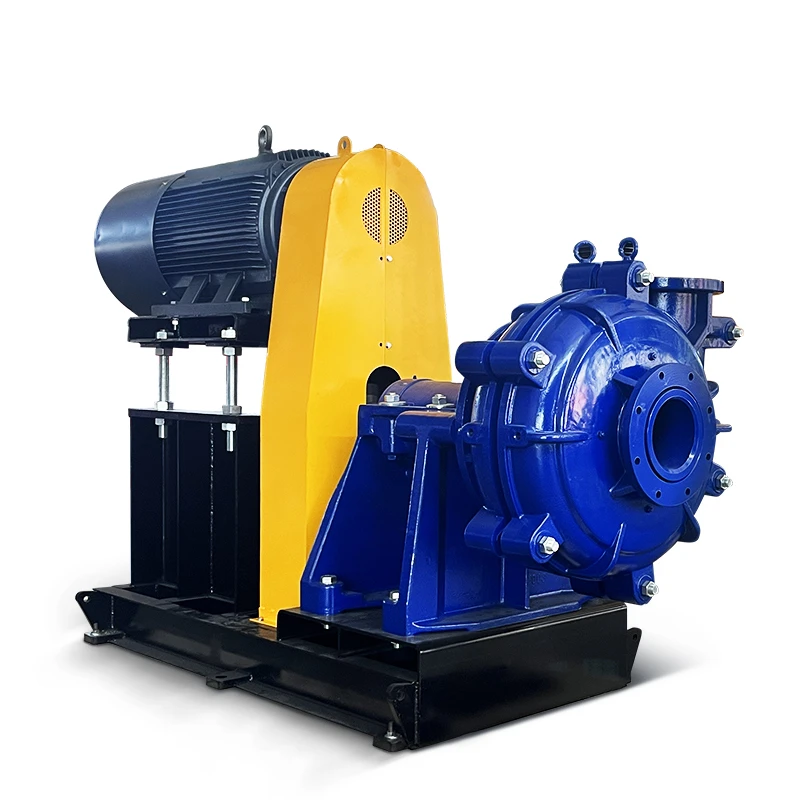

A slurry pump is designed to move mixtures of liquid and solid particles through industrial piping systems. Unlike standard water pumps, it must handle abrasive materials such as sand, minerals, ore, and other suspended solids without excessive wear.
A centrifugal slurry pump uses centrifugal force to transfer these mixtures efficiently. Its construction and operating principles are specifically adapted to cope with the demanding conditions created by abrasive and sometimes corrosive slurry.
What Is a Slurry Pump?
A slurry pump is a mechanical device used to transport liquid-solid mixtures from one location to another. These mixtures are common in industries such as mining, mineral processing, dredging, construction, and power generation.
Because solid particles can cause significant abrasion, slurry pumps typically use robust components and wear-resistant materials. Their internal design also helps maintain reliable flow while reducing damage caused by suspended solids.
How Does a Centrifugal Slurry Pump Work?
The operating principle is similar to that of a conventional centrifugal pump, but the components are engineered for slurry service.
The process generally follows these steps:
- Slurry enters the pump: The mixture enters through the suction inlet and reaches the impeller.
- The impeller rotates: A motor drives the impeller at high speed, transferring mechanical energy to the slurry.
- Centrifugal force accelerates the slurry: Rotation pushes the slurry outward from the center of the impeller.
- Pressure is generated: The casing converts part of the slurry’s velocity into pressure.
- The slurry exits: The pressurized mixture leaves through the discharge outlet and moves into the connected pipeline.
This continuous process allows the pump to transport large volumes of slurry over a specified distance and elevation.
Main Components of a Centrifugal Slurry Pump
Although designs vary by application, most centrifugal slurry pumps include several key components.
Impeller
The impeller is the rotating component that transfers energy to the slurry. Its shape, diameter, and vane configuration influence flow rate, pressure, and pump efficiency.
Pump Casing
The casing surrounds the impeller and directs the slurry toward the discharge outlet. It must withstand both hydraulic pressure and the impact of abrasive particles.
Shaft
The shaft connects the impeller to the drive system. It transfers rotational power from the motor while maintaining accurate alignment during operation.
Wear Parts
Components such as liners, throatbushes, and other replaceable parts may be exposed directly to abrasive slurry. Using suitable wear-resistant materials can extend service life and reduce maintenance requirements.
Where Are Slurry Pumps Used?
Slurry pumps are widely used wherever liquids contain significant amounts of solid particles. Common applications include:
- Mineral and ore processing
- Tailings transportation
- Sand and gravel handling
- Coal preparation
- Dredging operations
- Construction projects
- Ash handling
- Industrial wastewater containing solids
The appropriate pump depends on factors such as particle size, slurry concentration, flow rate, pressure requirements, and the abrasiveness of the material.
What Makes Slurry Pumping Challenging?
Moving slurry is more demanding than pumping clean water. Solid particles can wear internal components, while high concentrations can increase the power required for pumping.
Particle size and shape also matter. Sharp or hard particles can cause faster erosion, particularly at areas where slurry changes direction or passes through narrow clearances.
Temperature and chemical composition should also be considered. A slurry that is both abrasive and corrosive may require specialized materials and a carefully selected pump configuration.
How to Choose the Right Slurry Pump
Selecting a pump requires more than simply matching the desired flow rate. Important operating factors include:
- Required flow rate and discharge pressure
- Solid concentration by weight or volume
- Particle size and hardness
- Slurry density and viscosity
- Material abrasiveness and corrosiveness
- Suction conditions
- Pipeline length and elevation
- Expected operating hours and maintenance requirements
Accurate operating data helps ensure that the pump operates within a suitable range and avoids unnecessary wear or energy consumption.
Maintenance Considerations
Regular inspection is important for maintaining slurry pump performance. Wear components should be checked periodically, particularly in applications involving highly abrasive solids.
Operators should also monitor vibration, bearing temperature, leakage, flow performance, and unusual noise. Changes in these conditions can indicate problems such as component wear, misalignment, blockage, or operating conditions outside the pump’s intended range.
Conclusion
A centrifugal slurry pump combines the basic principle of centrifugal pumping with a heavy-duty design suited to liquid-solid mixtures. Its rotating impeller generates the energy needed to move abrasive slurry through industrial piping systems.
Understanding the slurry characteristics and operating requirements is essential when selecting and maintaining a pump. With the right configuration and proper maintenance, centrifugal slurry pumping systems can provide dependable performance in demanding industrial applications.