

Modern precision motion systems depend heavily on advanced control strategies to achieve high speed, accuracy, and stability. In industries such as semiconductor manufacturing, robotics, medical technology, and optical engineering, even minor deviations in motion can affect overall system performance. This makes control systems and feedback mechanisms a critical part of actuator design and application.
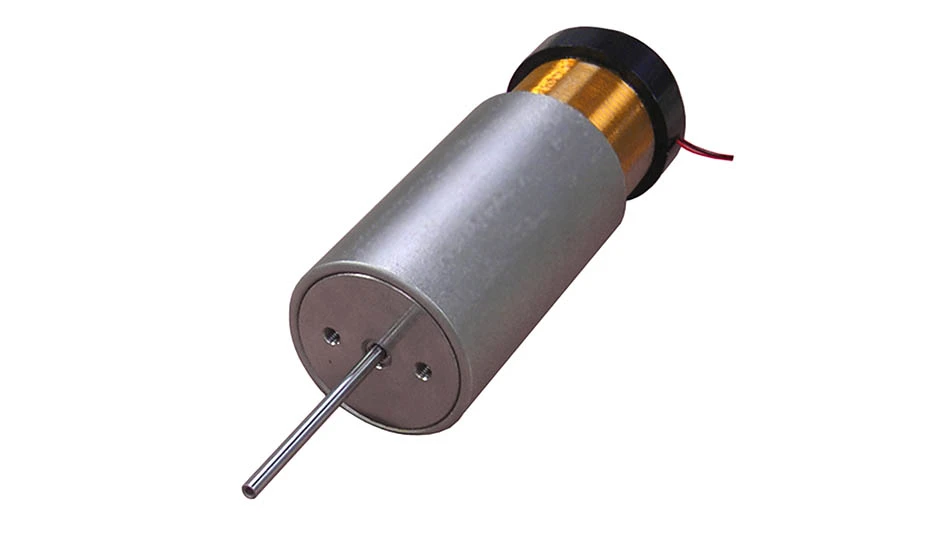
A voice coil linear actuator is a direct-drive electromagnetic device that produces linear motion through the interaction of a magnetic field and a current-carrying coil. Because it eliminates mechanical transmission elements such as gears and screws, it offers highly responsive and smooth motion control. Understanding how a voice coil actuator is controlled is essential for achieving optimal performance in precision applications.
Importance of Control Systems in Voice Coil Actuators
Unlike traditional actuators that rely on mechanical conversion, voice coil systems depend entirely on electrical control to regulate motion. This means performance is highly dependent on how well the control system is designed and tuned.
A well-implemented control system ensures:
- Accurate positioning
- Stable motion without oscillation
- Fast response to input commands
- Consistent force output
- Reduced overshoot and error correction
Without proper control, even a high-quality actuator may fail to deliver precise or stable motion.
Closed-Loop Control Systems
Most high-performance voice coil systems operate using closed-loop control. This means the system continuously monitors its position or velocity and adjusts input signals accordingly.
The basic structure includes:
- A controller (often PID-based)
- A power amplifier
- The voice coil linear actuator
- A feedback sensor
The controller compares the desired position with the actual position and corrects any deviation in real time. This continuous adjustment is what enables high precision and repeatability.
Role of Feedback Mechanisms
Feedback systems are essential for achieving precise motion control. They provide real-time data about position, speed, or force, allowing the controller to make accurate adjustments.
Common feedback devices include:
- Optical linear encoders for high-resolution position tracking
- Laser displacement sensors for non-contact measurement
- LVDTs (Linear Variable Differential Transformers) for robust industrial sensing
- Hall effect sensors for magnetic field-based feedback
Each type of sensor has its own advantages depending on resolution, cost, and environmental conditions.
Position Control vs Force Control
Voice coil actuators can operate in both position control and force control modes, depending on application requirements.
Position Control
In position control, the system focuses on reaching and maintaining a specific location. This is common in applications such as:
- Optical alignment systems
- Semiconductor wafer positioning
- Imaging device adjustment
Force Control
In force control, the system regulates the output force rather than position. This is useful in applications like:
- Material testing systems
- Medical device actuation
- Precision assembly operations
The ability to switch between these modes makes voice coil systems highly versatile.
PID Control and System Tuning
Proportional-Integral-Derivative (PID) control is widely used in voice coil actuator systems due to its simplicity and effectiveness.
Each component plays a role:
- Proportional control adjusts response based on current error
- Integral control eliminates long-term steady-state error
- Derivative control improves stability by predicting system behavior
Proper tuning of PID parameters is critical. Poor tuning can lead to overshoot, oscillation, or slow response.
Reducing Noise and Improving Stability
Electrical and mechanical noise can affect feedback accuracy and system stability. High-performance systems incorporate several strategies to minimize these effects.
Common approaches include:
- Shielded cables and grounded systems
- High-resolution signal filtering
- Mechanical damping in mounting structures
- Digital filtering algorithms in controllers
These improvements help maintain stable and accurate motion even in noisy industrial environments.
Real-Time Control and High-Speed Applications
One of the key advantages of voice coil technology is its ability to support high-speed real-time control. Because there are no mechanical transmission delays, the system can respond almost instantly to control signals.
This makes it ideal for:
- High-speed inspection systems
- Automated testing equipment
- Precision pick-and-place systems
- Dynamic optical adjustment systems
Fast feedback loops ensure that motion corrections happen within milliseconds.
Conclusion
Control systems and feedback mechanisms are essential to unlocking the full performance potential of a voice coil linear actuator. Through closed-loop control, high-resolution sensors, and precise PID tuning, these systems achieve exceptional accuracy, stability, and responsiveness.
As industrial applications continue to demand higher precision and faster motion, advanced control strategies will remain a key factor in maximizing the efficiency and reliability of voice coil actuator systems.