
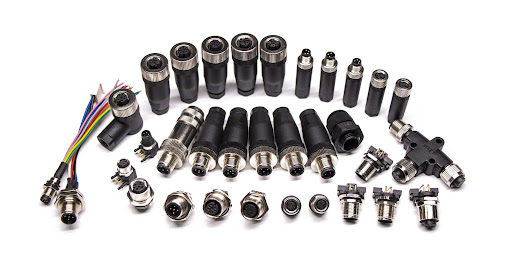

M type connector solutions are widely used in industrial electronics, automation systems, transportation equipment, and communication infrastructure. These connectors are designed to ensure stable electrical and signal transmission in environments where reliability, durability, and performance consistency are essential. As modern systems become more complex and compact, the need for robust interconnection solutions continues to grow.
In many engineering applications, stable connectivity determines overall system efficiency and safety. This is where components such as m type connector designs play a key role. They are built to withstand vibration, environmental stress, and continuous operational loads while maintaining secure electrical contact. Their versatility allows them to be used in both simple and highly advanced systems across multiple industries.
What Is an M Type Connector?
An M type connector is an industrial-grade electrical connector used to join circuits for power, signal, or data transmission. It is commonly designed in a circular or modular form factor, allowing for secure locking and easy installation in a wide range of equipment.
These connectors are especially valued in environments where standard connectors may fail due to mechanical stress or environmental exposure. Their structured design ensures stable contact between pins and sockets, minimizing the risk of signal interruption.
Structure and Key Components
The structure of an M type connector is carefully engineered to balance durability, electrical performance, and ease of use. Each component serves a specific function in maintaining reliable connectivity.
Typical structural elements include:
- Connector housing: Provides mechanical protection and environmental shielding
- Contact pins: Enable electrical or signal transmission between devices
- Insulating material: Prevents electrical leakage and ensures safety
- Locking mechanism: Secures the connection and prevents accidental disconnection
- Sealing components: Protect against dust, moisture, and contaminants
The combination of these elements ensures that the connector performs reliably in both static and dynamic applications.
Types of M Type Connectors
M type connectors come in various configurations depending on their application requirements. These variations help engineers select the appropriate connector for different electrical and environmental conditions.
Common types include:
- Power connectors for high-current applications
- Signal connectors for communication systems
- Hybrid connectors combining power and data transmission
- Shielded versions for electromagnetic interference protection
- Waterproof variants for outdoor or harsh environments
Each type is optimized for specific operational demands, ensuring flexibility across industries.
Common Applications in Industry
M type connectors are widely used across multiple sectors due to their adaptability and reliability. In industrial automation, they are used to connect sensors, controllers, and actuators within complex machinery systems.
In transportation systems, these connectors support electrical and communication networks in vehicles, trains, and infrastructure equipment. Their ability to withstand vibration and temperature changes makes them suitable for mobile and heavy-duty applications.
They are also commonly found in robotics, where precise and stable connections are required for motion control systems and feedback loops. In communication and electronic equipment, they help ensure uninterrupted signal transmission between components.
Advantages of M Type Connectors
One of the main advantages of M type connectors is their robust construction, which allows them to perform reliably in demanding environments. Their secure locking mechanism prevents accidental disconnection, while their sealed designs protect against dust and moisture.
Other key benefits include:
- High durability under vibration and mechanical stress
- Versatile configurations for different system requirements
- Strong electrical performance with low resistance
- Easy installation and maintenance
- Compatibility with a wide range of industrial systems
These advantages make them a preferred choice in applications where reliability is critical.
Environmental and Performance Considerations
M type connectors are designed to operate in challenging environmental conditions. They can withstand temperature fluctuations, humidity, and exposure to industrial contaminants without significant performance degradation.
Proper material selection and sealing techniques help extend their lifespan and ensure stable electrical performance over time. In many applications, corrosion resistance and shielding are also important factors that contribute to long-term reliability.
Conclusion
M type connectors are essential components in modern electrical and industrial systems, offering a balance of durability, flexibility, and reliable performance. Their structured design, versatile configurations, and ability to operate in harsh environments make them suitable for a wide range of applications, from automation and transportation to communication and robotics. As industrial systems continue to advance, these connectors will remain a fundamental part of ensuring stable and efficient connectivity across critical technologies.