
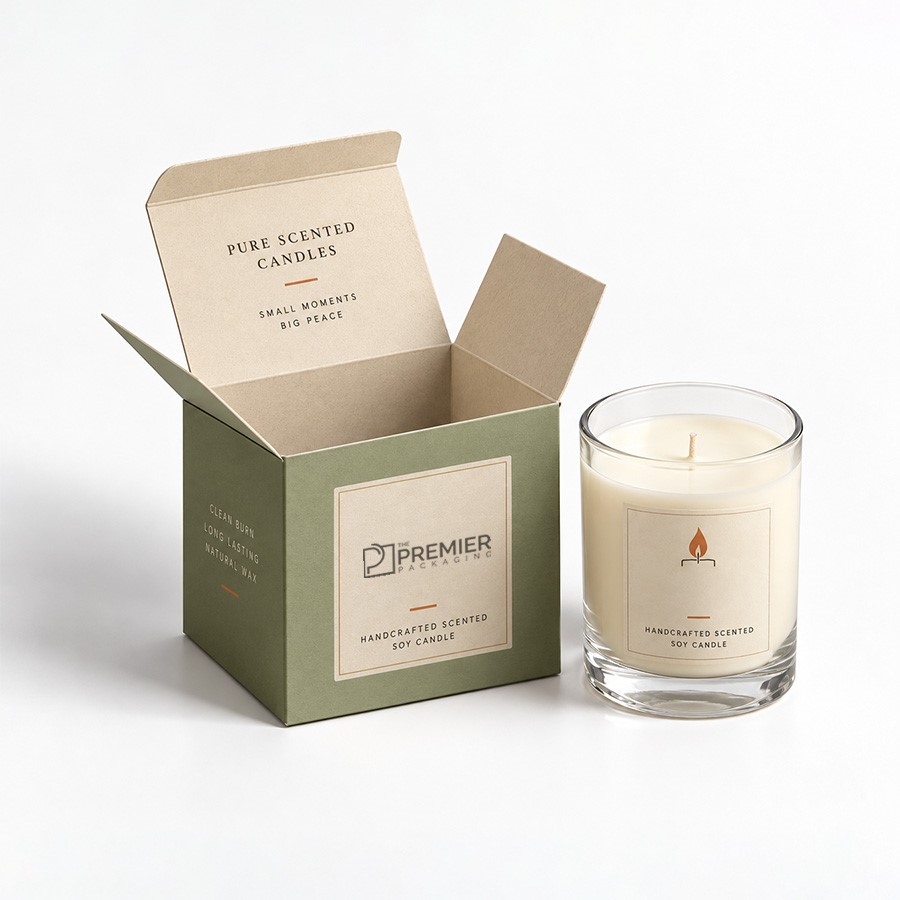

Take the box off a candle, and there’s not much left to look at a jar, some wax, maybe a scent name stamped somewhere on the bottom. Everything else, the mood, the reason someone picks this one over the ten sitting next to it, the whole feel of the brand, all lives on the box, not the candle itself. Wax needs protecting in transit, sure, nobody’s arguing that. But a box that’s actually been thought through does more than just hold the product together. It’s selling the candle before the lid even comes off.
Protection Still Comes First
Wax can be a delicate material that doesn’t always appear so on the surface. It is brittle and gets hard when pressure is applied; it is soft or melts when heated; it also dents and scratches; and it is hard to realize it is sitting near an undamaged one. A box of candles must protect against all that and not be too cumbersome, and that’s harder to accomplish than it sounds.
A handful of structural details end up mattering more than people expect:
- A snug interior fit so the candle isn’t shifting around during shipping
- Enough rigidity in the outer box that it won’t crush under stacked weight
- Ventilation or breathable materials for candles that need airflow to avoid trapped moisture
- A closure that actually holds through handling, without relying on extra tape
Skip any of these, and it tends to show up fast — dented wax, a cracked container, or a candle that arrives with a noticeably fainter scent because the box didn’t seal properly.
The Structure Shapes the Whole Unboxing
Beyond basic protection, how a box actually opens and reveals the candle matters more than many brands realize going in. A lift-off lid gives a clean, simple reveal. A window cutout lets people see the candle before they even open it, which works well when the color or container itself is part of the appeal. Magnetic closures add a small but real sense of quality — there’s a satisfying pop when the box opens, rather than just sliding a lid off.
None of these is objectively better than the others. They just fit different price points and different brand personalities. A budget candle line probably doesn’t need a magnetic closure. A premium gift candle usually benefits from one.
Branding That Doesn’t Try to Say Everything at Once
Candle boxes are very large and can easily lead brands to include more text and design than the box can actually accommodate. The best designs will keep a few important factors in mind: leaving plenty of “empty” space to avoid crowding, a cool name for the scent, a neat logo, and maybe a brief description of the ingredients or the scent’s inspiration.
This is even more crucial for Christmas candles. A messy box doesn’t add to the upscale branding efforts. The simplicity and balance of the layout will be more valuable than a layout that tries to include too much information.
Material Choice Affects Feel and Sustainability Both
Custom cardboard candle boxes have become the go-to packaging material, and it’s not hard to see why. It’s sturdy enough to protect the product, light enough to keep shipping costs reasonable, and it prints well without requiring heavy coatings that impede recyclability. For brands building a natural or eco-conscious identity, cardboard reinforces that message visually in a way glossy plastic just can’t match.
That said, thickness and finish still need to match the specific candle. A heavier jar candle needs a sturdier board and more structural support than a lightweight votive would, and getting that wrong in either direction either under-protects the product or adds cost nobody needed to spend.
Scent Preservation Is Part of the Packaging Job Too
Candle packaging is not just about appearance and physical protection — it’s about maintaining candle strength before the wick is ignited. Over time, candles stored in a poorly sealed box or left on the shelf for a while can lose a little of their fragrance. That scent stays inside the box until someone opens it up, and it helps to keep the lid tight, have little gaps in the structure and avoid highly porous materials.
Finding a Manufacturer That Actually Understands the Product
Not every packaging supplier accounts for what candles specifically need — heat sensitivity, scent preservation, and the right balance between rigidity and weight. A company like The Premier Packaging works specifically with categories like candles, which usually means better guidance on material choices and structural design, rather than treating candle boxes like any other piece of retail packaging.
Final Words
Well-designed candle packaging is juggling a handful of priorities at once — protecting something fragile, preserving scent, presenting the brand clearly, and doing all of that without unnecessary bulk or cost. Get those pieces working together, and the box stops being just something the candle ships inside and becomes part of its appeal. For a product that’s really about mood and experience, getting that right isn’t a small thing.
FAQ
Does the box material actually affect scent strength over time?
Yes, to some extent. A well-sealed box with minimal gaps retains fragrance better than one that is loosely fitted or overly porous, especially during longer storage periods.
Is cardboard sturdy enough to protect glass candle containers?
With the right structural design, yes. It needs sufficient rigidity and a snug interior fit, but cardboard can protect glass containers well without switching to a heavier material.
Do window cutouts weaken a candle box’s structural integrity?
A little, depending on placement, but well-designed windows account for that by reinforcing the surrounding structure so the box still holds its shape.
Is a magnetic closure necessary for candle packaging?
Not necessary, but it adds a premium feel that many gift-focused or higher-end candle brands consider worth the extra cost.
How much does packaging design actually influence candle sales?
More than many brands expect. Packaging communicates mood, quality, and brand identity before anyone’s even smelled or lit the candle, which makes it a real factor in the purchase decision.