
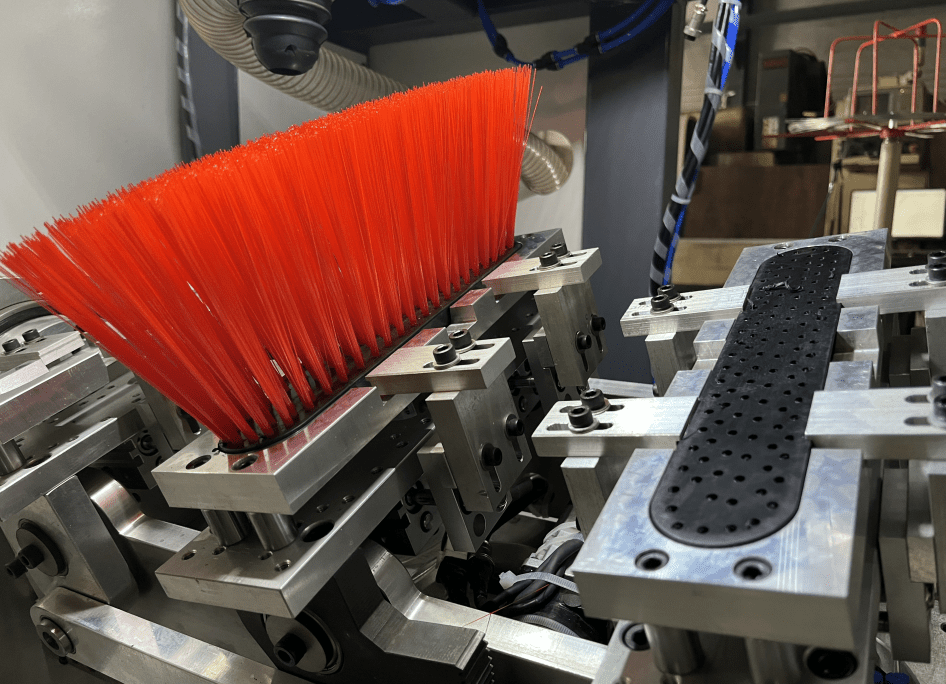

Selecting the right equipment is a crucial step for businesses involved in broom and brush manufacturing. The machine you choose directly affects production efficiency, product quality, operating costs, and future growth opportunities. With various models available in the market, understanding your business requirements before investing can help you make a more informed decision.
A reliable Broom Brush Machine should match your production goals, material requirements, and operational needs. Instead of focusing only on the purchase price, manufacturers should evaluate factors such as machine capacity, durability, automation level, and long-term performance.
Define Your Production Requirements
The first step in choosing the right machine is understanding your current and future production needs. Different businesses operate at different scales, so equipment selection should be based on expected output and product variety.
Consider these questions:
- How many brushes do you need to produce daily?
- What types of broom brushes will you manufacture?
- Are you planning to expand production in the future?
- How much labor is available for machine operation?
Clear production goals make it easier to select equipment that supports efficient manufacturing.
Select the Right Production Capacity
Machine capacity is one of the most important factors to consider. A machine with insufficient output may slow down your business, while a high-capacity model may increase costs if your production demand is limited.
Small businesses often benefit from compact or semi-automatic equipment, while larger manufacturers may require fully automatic machines for continuous production.
Choosing the right capacity helps balance productivity, investment, and operating expenses.
Evaluate Machine Quality and Durability
A durable machine provides stable performance and reduces the need for frequent repairs. High-quality construction materials and reliable internal components contribute to longer service life.
When comparing machines, pay attention to:
- Frame strength
- Component quality
- Manufacturing precision
- Expected service life
- Maintenance requirements
Investing in durable equipment can reduce long-term costs and improve production reliability.
Consider the Level of Automation
Automation can significantly improve manufacturing efficiency. Different businesses require different levels of automation depending on their production volume and workforce availability.
Common options include:
Manual Machines
These are suitable for small-scale operations with lower production requirements. They offer simple operation and lower investment costs.
Semi-Automatic Machines
These provide improved efficiency by reducing manual tasks while maintaining operational flexibility.
Fully Automatic Machines
These are designed for large production facilities that require high output, consistent quality, and reduced labor involvement.
Check Material Compatibility
The materials used in broom brush production can vary widely. Some products require synthetic fibers, while others use natural materials. The selected machine should be compatible with the materials needed for your product range.
Proper material compatibility ensures smoother production, better product quality, and reduced material waste.
Review Maintenance and Support
Maintenance plays an important role in keeping production running efficiently. Before purchasing, consider how easy it is to maintain the machine and whether technical support is available.
Important points include:
- Spare parts availability
- Ease of cleaning and servicing
- Technical assistance
- Operator training
- Warranty coverage
Reliable support helps reduce downtime and improves the overall ownership experience.
Compare Energy Efficiency
Energy consumption affects production costs, especially for businesses operating machines for long hours. Equipment with efficient motors and optimized systems can help lower electricity expenses.
Energy-efficient machines also support more sustainable manufacturing practices by reducing resource consumption.
Consider Future Expansion
A machine should not only meet your current requirements but also support future business growth. Choosing equipment with flexible production capabilities allows manufacturers to increase output or introduce new products without replacing machinery too soon.
Planning ahead can make your investment more valuable over time.
Balance Cost and Long-Term Value
While budget is an important consideration, the cheapest option is not always the most economical choice. A machine with better durability, efficiency, and reliability may provide greater value throughout its working life.
Evaluate the total cost, including:
- Purchase price
- Operating expenses
- Maintenance costs
- Production efficiency
- Expected lifespan
This approach helps identify the best investment for your business.
Conclusion
Choosing the best broom brush machine requires careful evaluation of production needs, machine capacity, automation level, durability, and long-term costs. By understanding your business goals and comparing equipment features, you can select a machine that improves efficiency, maintains product quality, and supports future growth. A well-chosen machine becomes a valuable foundation for building a successful and competitive broom manufacturing operation.