
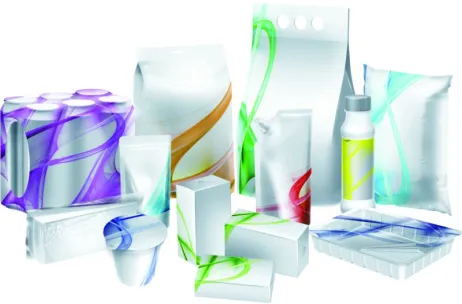

BOPP (Biaxially Oriented Polypropylene) film is a widely used material in flexible packaging because it offers an effective balance of strength, clarity, and protection. It is commonly applied in food packaging, consumer goods, pharmaceuticals, and industrial products where durability and shelf life are critical factors.
As global packaging demands increase, manufacturers are continuously improving film performance to better protect products from environmental damage, physical stress, and contamination. This is why many brands carefully evaluate different BOPP film manufacturers to ensure their packaging materials provide consistent durability and extended shelf life for a wide range of applications.
The Role of Durability in Modern Packaging
Durability is a key requirement in packaging because products often travel long distances and are exposed to varying environmental conditions. Packaging must withstand mechanical stress, temperature changes, and humidity without losing integrity.
BOPP film contributes to durability in several ways:
- High tensile strength prevents tearing during handling
- Excellent dimensional stability maintains shape under stress
- Resistance to moisture helps preserve product quality
- Lightweight structure reduces packaging load without weakening protection
These properties make BOPP film ideal for both primary and secondary packaging applications.
Material Engineering for Stronger Film Performance
The foundation of durable BOPP film lies in material selection and polymer engineering. Manufacturers carefully choose polypropylene resins with consistent molecular structure to ensure reliable performance.
Key material improvements include:
- High-purity resin selection for uniform film structure
- Controlled polymer blending for enhanced strength
- Reduction of impurities that can create weak points
- Optimization of molecular weight distribution
These material decisions directly influence the film’s resistance to tearing, puncturing, and deformation.
Biaxial Orientation and Strength Enhancement
One of the most important processes used by manufacturers is biaxial orientation, where the film is stretched in both machine and transverse directions. This aligns polymer molecules and significantly improves mechanical properties.
The benefits include:
- Increased tensile strength
- Improved resistance to tearing and puncture
- Enhanced stiffness and dimensional stability
- Better overall load-bearing capacity
This process allows thinner films to perform like thicker materials, improving efficiency without compromising durability.
Barrier Properties and Shelf Life Extension
Shelf life is heavily influenced by how well packaging protects products from oxygen, moisture, and external contaminants. BOPP film plays a crucial role in maintaining product freshness, especially in food packaging.
Manufacturers improve barrier performance through:
- Multi-layer film structures
- Specialized coatings to reduce permeability
- Surface treatments that enhance sealing performance
- Additives that improve moisture resistance
These enhancements help slow down oxidation, prevent moisture ingress, and preserve flavor, texture, and appearance.
Advanced Coating Technologies
Coatings are widely used to enhance both durability and protective performance. They provide additional functional layers without significantly increasing film thickness.
Common coating types include:
- Heat-seal coatings for strong and reliable sealing
- Barrier coatings for moisture and oxygen protection
- Anti-static coatings to reduce dust attraction
- Abrasion-resistant coatings for surface durability
These coatings improve overall packaging lifespan and ensure products remain protected throughout distribution and storage.
Quality Control and Testing Standards
To ensure consistent performance, manufacturers implement strict quality control systems throughout production. These systems help maintain uniformity and reliability in large-scale output.
Key testing methods include:
- Tensile and elongation strength testing
- Water vapor transmission rate (WVTR) analysis
- Oxygen transmission rate (OTR) testing
- Impact and puncture resistance evaluation
These tests ensure that every batch of film meets performance standards required for long shelf life applications.
Surface Treatments for Better Performance
Surface treatment improves adhesion, sealing, and printability, all of which contribute indirectly to durability and shelf life. Without proper treatment, packaging layers may separate or fail under stress.
Common techniques include:
- Corona treatment to improve surface energy
- Plasma treatment for enhanced adhesion performance
- Chemical priming for specialized coating compatibility
These processes ensure that inks, adhesives, and laminates bond securely to the film.
Conclusion
BOPP film plays a vital role in enhancing packaging durability and extending product shelf life across multiple industries. Through advanced material engineering, biaxial orientation, coating technologies, and strict quality control, manufacturers are able to produce films that offer reliable protection under demanding conditions.
As packaging requirements continue to evolve, innovation in film technology remains essential. The expertise of manufacturers in optimizing durability and barrier performance ensures that products stay protected, fresh, and visually appealing throughout their lifecycle.