
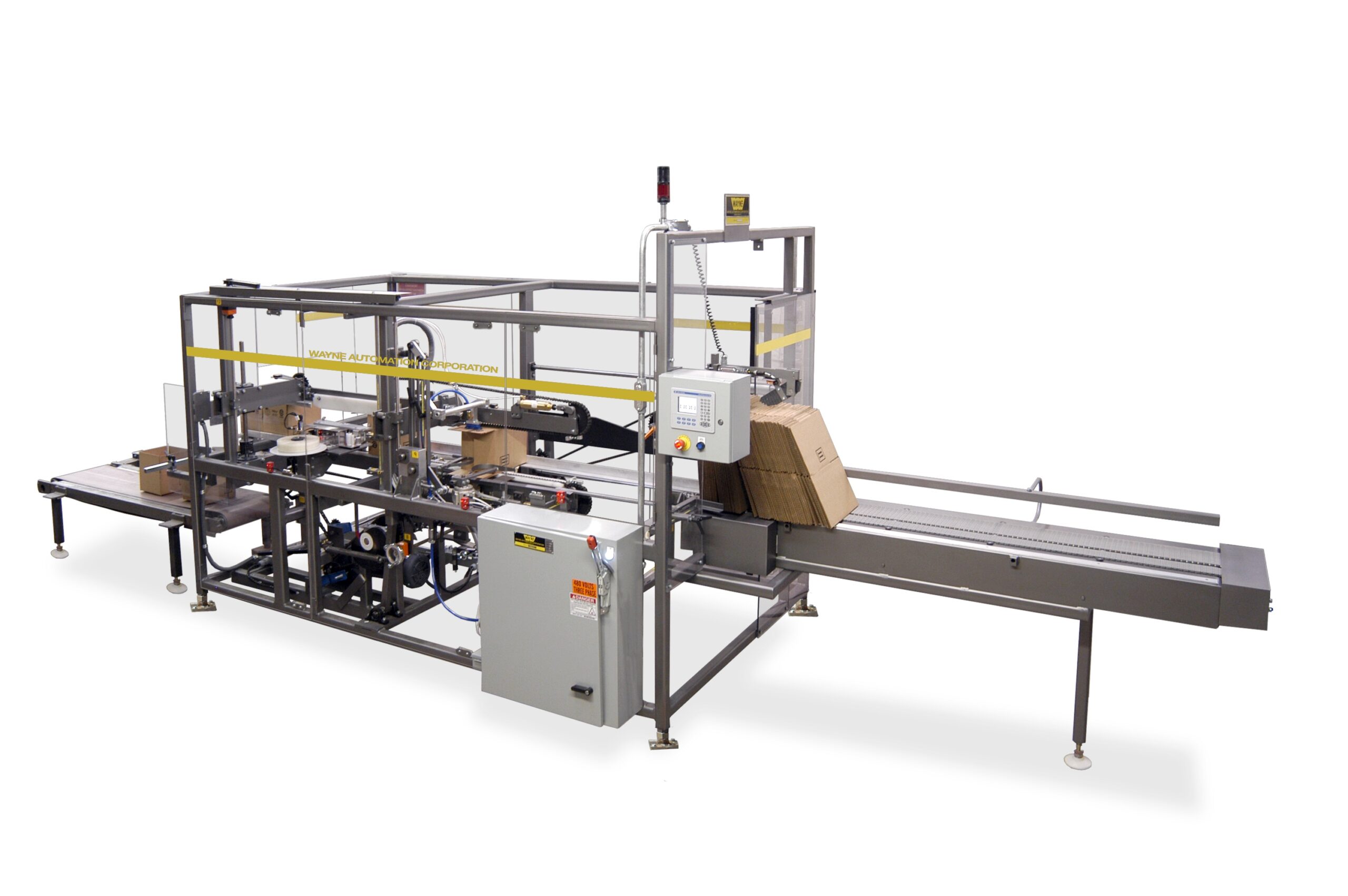

Modern packaging equipment relies on control systems to coordinate mechanical movements, monitor operating conditions, and maintain consistent production cycles. In case forming applications, these systems help ensure that cartons move through feeding, opening, folding, and forming stages in the correct sequence.
An Automatic Case Erector typically combines mechanical components with sensors, controllers, actuators, and operator interfaces. Together, these elements allow the machine to respond to carton positions, detect certain faults, and coordinate its movements with other equipment on the packaging line.
What Is a Case Erector Control System?
A control system is the part of the equipment responsible for managing how different components operate. It receives information from sensors and other inputs, processes that information, and sends commands to motors, pneumatic devices, and other actuators.
This coordination helps prevent individual mechanisms from operating out of sequence. It also provides operators with a way to start, stop, adjust, and monitor the equipment.
Programmable Logic Controllers
Programmable Logic Controllers, commonly called PLCs, are widely used in industrial automation. A PLC can execute programmed instructions based on signals received from sensors and operator controls.
In a case-forming application, the controller may coordinate actions such as carton feeding, opening, folding, and transferring the formed case to the next stage. The exact configuration depends on the equipment design and production requirements.
Sensors and Detection Systems
Sensors provide the control system with information about what is happening inside the machine. They can help determine whether a carton is present, whether a component has reached a particular position, or whether a process condition has been met.
Common sensor technologies include photoelectric, proximity, and position sensors. Reliable detection is important because inaccurate signals can cause incorrect sequencing, unnecessary stops, or missed cartons.
Human-Machine Interfaces
Many modern packaging machines use a Human-Machine Interface, or HMI, to give operators access to machine controls and status information. A touchscreen or similar interface can display operating conditions, alarms, settings, and other useful information.
An HMI can also make format changes and troubleshooting more manageable by presenting relevant information in an accessible way. The interface design varies depending on the machine manufacturer and control architecture.
Motor and Motion Control
Motors are responsible for moving various mechanical components throughout the case-forming process. The control system determines when these motors should start, stop, or change their operating behavior.
Depending on the equipment, motor control may involve conventional drives or more advanced variable-speed systems. Proper motion coordination helps maintain the timing required for reliable carton handling.
Pneumatic Control
Pneumatic systems are also common in automated packaging machinery. Compressed air can be used to operate cylinders, grippers, clamps, and other mechanisms.
Control valves regulate the movement of these pneumatic components based on signals from the control system. Maintaining appropriate air pressure and checking for leaks are important for reliable operation.
Safety Controls
Safety systems are an essential part of automated equipment. Emergency-stop devices, safety switches, guards, and other protective components can help reduce risks associated with moving machinery.
Safety controls are generally designed so that certain machine functions stop or become unavailable when an unsafe condition is detected. Operators should always follow the equipment manufacturer’s safety procedures and applicable workplace requirements.
Communication With Other Machines
Case erectors often operate as part of a larger automated packaging line. Communication between machines allows the equipment to coordinate carton flow with filling, sealing, conveying, or other processes.
Signals may indicate when a downstream machine is ready to receive a case or when the erector should temporarily pause. This type of coordination can help prevent accumulation and unnecessary machine stops.
Alarm and Fault Monitoring
Control systems can monitor selected operating conditions and generate alarms when a problem occurs. Depending on the system, an alarm may indicate a missing carton, sensor issue, jam, low air pressure, or another abnormal condition.
Clear fault information can shorten troubleshooting time because operators have a starting point for investigating the problem instead of relying entirely on visual inspection.
Importance of Proper Configuration
Control systems need to be configured appropriately for the cartons and operating conditions involved. Incorrect settings can affect timing, feeding, and machine coordination even when the mechanical components are functioning correctly.
When processing different carton formats, operators may need to adjust machine parameters or mechanical settings according to the manufacturer’s procedures.
Maintenance of Control Components
Control systems require attention just like mechanical components. Sensors should be kept clean, electrical connections should be inspected when appropriate, and pneumatic equipment should be checked for leaks or pressure problems.
Software and controller settings should also be managed carefully. Unauthorized changes to programmed parameters can affect machine behavior and should be avoided unless performed by qualified personnel.
The Role of Techflow Pack
Understanding the control architecture of packaging equipment can help manufacturers evaluate machines more effectively. Instead of focusing only on output speed, businesses can also consider diagnostics, safety features, communication capabilities, adjustment requirements, and ease of operation.
A suitable control system should support the needs of the complete packaging process while remaining practical for the operators and maintenance personnel responsible for the equipment.
Looking at the Complete Automation System
The control system is only one part of an automatic case-forming machine, but it plays an important role in coordinating the entire process. Sensors provide information, controllers make programmed decisions, and actuators carry out the required movements.
When these elements work together with properly maintained mechanical components, suitable cartons, and trained operators, the packaging line can achieve more predictable and efficient case-forming performance.