
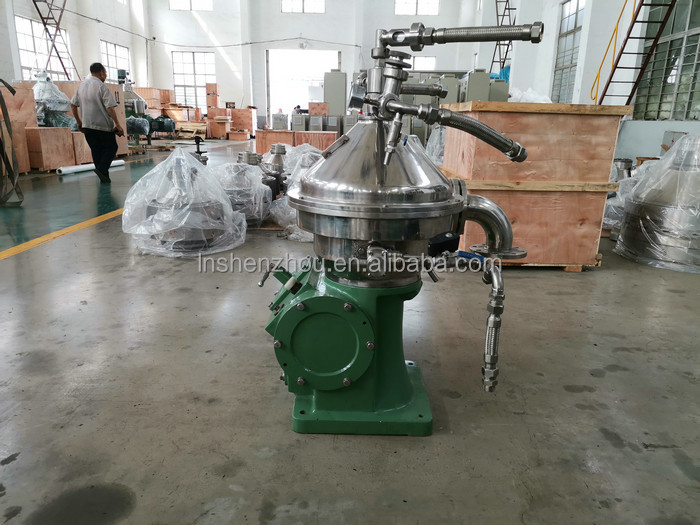

Selecting separation equipment for a processing plant requires a clear understanding of the material being handled, the required production rate, and the desired separation result. A centrifuge that performs well in one application may not provide the same results in another because feed properties and operating conditions can vary significantly.
When evaluating a Disc Bowl Centrifuge, plant operators should look beyond basic flow capacity. Bowl configuration, solids concentration, liquid properties, discharge requirements, maintenance needs, and process integration all play a role in determining whether a particular system is suitable.
Define the Separation Objective
The first question should be what the plant needs the centrifuge to accomplish. Common objectives include removing suspended solids from a liquid, separating two immiscible liquids, or performing both functions in the same process.
A clarification application may prioritize the removal of fine particles, while a liquid-liquid process may focus more heavily on phase purity and recovery. Defining the objective helps narrow down the appropriate equipment configuration.
Analyze the Feed Material
The characteristics of the incoming material are among the most important selection criteria. Before choosing equipment, plant engineers should understand the composition of the feed under normal operating conditions.
Key properties include:
- Particle size and distribution
- Solids concentration
- Particle density
- Liquid density
- Viscosity
- Temperature
- Chemical characteristics
Feed conditions can change during production, so it is useful to consider both normal and expected peak conditions.
Determine the Required Capacity
Processing capacity should be matched to the plant’s actual production requirements. A centrifuge with a high theoretical flow rate may not achieve that rate when processing a difficult mixture that requires a high degree of clarification.
Higher flow rates generally reduce the time available for separation. If the plant requires very clear liquid or high phase purity, the practical operating rate may need to be lower than the equipment’s maximum rated capacity.
Capacity should therefore be evaluated together with the required separation efficiency.
Consider Solids Loading
The quantity of solids entering the machine affects both operating conditions and solids-discharge requirements.
Low-solids applications may require only occasional solids removal, whereas processes with significant solids loading may need a system capable of frequent or continuous discharge.
Understanding the expected solids load can help prevent excessive accumulation and unnecessary process interruptions.
Evaluate Bowl and Disc Configuration
The internal configuration of the centrifuge influences its separation behavior. A disc stack creates multiple thin liquid layers, increasing the effective settling area within the rotating bowl.
The design should be appropriate for the size and characteristics of the particles or liquid phases being separated. Closely spaced discs can be particularly useful for fine-particle clarification, although the optimum configuration depends on the specific process.
Check Liquid Properties
Liquid characteristics can have a major impact on centrifuge performance.
Viscosity is particularly important because highly viscous liquids can slow the movement of particles and liquid phases. Density differences also affect how readily components separate under centrifugal force.
If the process operates across a wide temperature range, changes in viscosity and phase behavior should also be considered during equipment selection.
Choose the Appropriate Discharge Arrangement
The solids discharge system should match the plant’s operating requirements. If solids are generated continuously, an appropriate automatic discharge arrangement can help maintain uninterrupted processing.
For applications with relatively low solids content, periodic cleaning or manual removal may be sufficient.
Choosing the discharge method based on actual solids production can help balance equipment complexity with operational requirements.
Consider Material Compatibility
The materials used to construct the centrifuge need to be compatible with the process fluid. Chemical exposure, temperature, cleaning agents, and the characteristics of the separated material can all influence material selection.
For food, pharmaceutical, and other hygienic applications, additional requirements may apply to surface finishes, cleaning procedures, and equipment design.
Assess Automation Requirements
Modern processing plants often rely on automated monitoring and control systems. A centrifuge may need to work alongside pumps, valves, sensors, tanks, and other processing equipment.
Depending on the application, useful monitoring functions can include operating speed, vibration, temperature, pressure, feed rate, and discharge activity.
The appropriate level of automation depends on the plant’s production goals and control strategy.
Plan for Maintenance
Long-term reliability should be considered before installation. Regular cleaning, inspection, lubrication where applicable, vibration monitoring, and component replacement are part of normal centrifuge ownership.
Maintenance access is also important. Equipment that is difficult to inspect or service may result in longer downtime during routine work.
Plant operators should follow the maintenance schedule and safety procedures specified for the particular machine.
Consider Energy and Operating Costs
Initial equipment price is only one part of the overall cost. A processing plant should also consider energy consumption, maintenance, cleaning, replacement components, labor, and potential downtime.
For equipment operating continuously, even relatively small differences in energy consumption can become significant over an extended operating period.
A lifecycle-cost approach can therefore provide a more useful comparison than purchase price alone.
Evaluate Installation and Process Integration
Available floor space, piping arrangements, electrical requirements, feed conditions, and discharge handling should be reviewed before selecting the equipment.
The centrifuge should integrate smoothly with upstream and downstream processes. Poorly matched pumps, unstable feed conditions, or inadequate solids-handling arrangements can limit the performance of otherwise suitable equipment.
A complete process assessment can help identify these issues before installation.
Consider Testing Before Final Selection
When feed characteristics are uncertain, testing representative material can provide useful information. Laboratory or pilot-scale trials can help evaluate separation efficiency, achievable throughput, solids behavior, and the quality of the separated streams.
Testing is particularly valuable for new processes or mixtures containing very fine particles, unusual viscosities, or variable solids concentrations.
Shenzhou Machinery is one manufacturer associated with centrifugal separation equipment, but final equipment selection should be based on the specific process data and technical requirements of the plant.
Build a Practical Selection Checklist
Before making a final decision, plant engineers can review several basic questions:
- What type of separation is required?
- What is the normal and maximum feed rate?
- What are the solids concentration and particle size?
- What are the densities and viscosity of the process liquids?
- How frequently must solids be removed?
- What separation quality is required?
- What cleaning and maintenance procedures are necessary?
- How will the centrifuge integrate with the existing process?
- What are the expected energy and operating costs?
- Has representative feed material been tested where necessary?
Answering these questions provides a stronger basis for comparing different centrifuge configurations.
Conclusion
Choosing the right disc bowl centrifuge for a processing plant involves more than selecting a machine based on its rated capacity. Feed composition, separation objectives, solids loading, liquid properties, disc configuration, discharge method, automation, maintenance, and total operating costs all need to be considered.
A well-matched centrifuge can provide consistent separation while fitting efficiently into a continuous production process. By evaluating actual operating conditions and testing representative materials when needed, plant operators can make a more informed equipment selection and reduce the risk of performance problems after installation.