
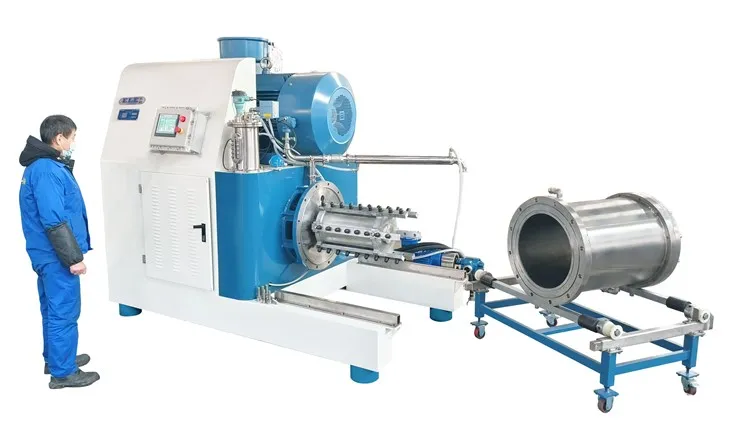

In modern industrial processing, the demand for precise particle size reduction continues to grow across sectors such as paints, coatings, pharmaceuticals, chemicals, inks, and advanced materials. Achieving consistent quality and high performance depends not only on the technology used but also on how the equipment is engineered and manufactured.
High-performance grinding systems are the result of strict design principles, material selection, and production standards. In this context, experienced bead mill manufacturers play a key role in ensuring that every machine meets industrial expectations for efficiency, durability, and output consistency.
Importance of Quality Standards in Bead Mill Production
Quality standards are essential in the manufacturing of bead milling equipment because these machines operate under high-speed, high-energy conditions. Even small design flaws can lead to inefficiencies, uneven particle size distribution, or mechanical failure.
To ensure reliability, manufacturers follow structured quality control processes that cover every stage of production—from raw material selection to final assembly and testing.
Engineering Principles Behind Bead Mill Design
The engineering of bead mills is based on optimizing energy transfer, material flow, and grinding efficiency. Every component is designed to contribute to stable and effective particle size reduction.
Key engineering principles include:
- Efficient energy conversion from motor to grinding media
- Optimized rotor and chamber geometry for uniform grinding
- Controlled bead movement to maximize collision efficiency
- Stable thermal management to prevent overheating
These principles ensure that the machine performs consistently under continuous industrial operation.
Material Selection and Structural Integrity
One of the most critical aspects of bead mill manufacturing is material selection. Since the equipment is exposed to intense mechanical stress and abrasion, durability is a top priority.
Manufacturers typically use:
- Wear-resistant alloys for grinding chambers
- High-strength ceramics for grinding media compatibility
- Corrosion-resistant materials for chemical processing
- Precision-engineered seals to prevent leakage
Strong structural integrity ensures long service life and reduces maintenance requirements.
Precision Manufacturing and Component Accuracy
Accuracy in component manufacturing directly affects the performance of bead mills. Even minor deviations in rotor alignment or chamber dimensions can impact grinding efficiency.
To maintain precision, manufacturers use:
- CNC machining for high-accuracy components
- Advanced balancing techniques for rotating parts
- Strict dimensional inspection during production
- Automated assembly processes for consistency
This ensures that each machine operates smoothly and delivers uniform results.
Role of Testing and Quality Control
Before a bead mill is delivered for industrial use, it undergoes extensive testing to verify performance and reliability. Quality control procedures help identify potential issues before the machine reaches the customer.
Common testing procedures include:
- Performance testing under load conditions
- Particle size distribution analysis
- Temperature and pressure stability checks
- Mechanical durability testing
These tests ensure that the equipment meets both safety and performance standards.
Process Optimization in Manufacturing
Modern production processes are designed to improve efficiency while maintaining high-quality output. Manufacturers continuously refine their engineering methods to reduce defects and enhance machine performance.
Key optimization strategies include:
- Standardized production workflows
- Continuous process monitoring
- Lean manufacturing principles
- Integration of automation technologies
These improvements help reduce production time while maintaining consistent quality.
Custom Engineering for Industrial Applications
Different industries require different milling conditions. As a result, manufacturers design customized solutions based on specific application needs.
Examples include:
- Fine dispersion systems for coatings and inks
- High-precision milling for pharmaceuticals
- Heavy-duty systems for chemical processing
- Nano-scale grinding systems for advanced materials
Customization ensures that the equipment performs efficiently in diverse industrial environments.
Importance of Compliance and Industry Standards
Adhering to international manufacturing standards is essential for ensuring safety, reliability, and global usability. Many manufacturers follow strict guidelines related to mechanical safety, energy efficiency, and environmental performance.
Compliance helps ensure:
- Safe machine operation
- Consistent product quality
- Reduced environmental impact
- Global acceptance of equipment
This builds trust and reliability in industrial markets.
Conclusion
The production of high-performance bead milling equipment requires a combination of advanced engineering, strict quality control, and precision manufacturing. Every stage of the process contributes to the final performance, from material selection to testing and customization.
Experienced bead mill manufacturers ensure that these machines meet the demanding requirements of modern industries by maintaining high standards of design and production. Their engineering expertise enables reliable, efficient, and durable solutions for a wide range of industrial applications.