
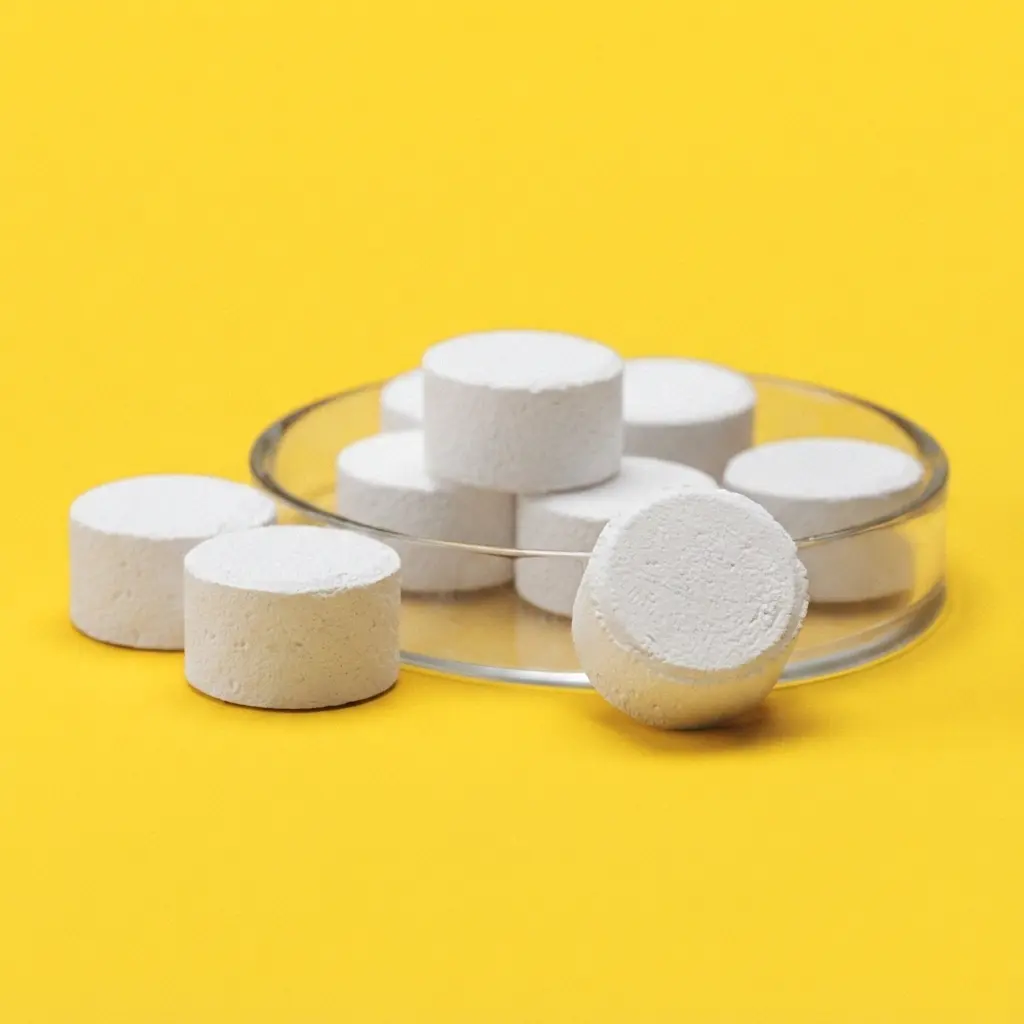

Chlorine-based chemicals play an important role in modern disinfection and water treatment operations. They are used in applications ranging from swimming pool sanitation and industrial water management to selected cleaning and hygiene processes. Among these products, trichloroisocyanuric acid, commonly known as TCCA, is valued for its high available chlorine content, relatively stable solid form, and suitability for various controlled disinfection applications.
TCCA 90 is a commonly used commercial grade that typically contains approximately 90% available chlorine, subject to the manufacturer’s specifications and applicable test methods. When evaluating TCCA 90, buyers should examine its active chlorine content, purity, moisture level, physical form, packaging, and safety documentation. Understanding these characteristics helps distributors, industrial users, and water treatment professionals select a product that meets their application requirements and quality expectations.
1. What Is TCCA 90?
Trichloroisocyanuric acid is an organic chlorine compound used as a disinfectant and oxidizing agent. It is generally supplied as a white solid in tablet, granule, or powder form.
The designation TCCA 90 refers to a commercial formulation with an available chlorine specification of approximately 90%. Available chlorine represents the oxidizing capacity of the product under defined testing conditions. It is an important purchasing parameter because it helps buyers compare product grades and assess their suitability for intended applications.
TCCA releases available chlorine when it comes into contact with water. The released chlorine can help inactivate susceptible microorganisms when used under appropriate conditions.
Its high available chlorine content makes it useful in selected industrial and sanitation applications, although the correct formulation and application procedure must always be considered.
2. Key Chemical Properties of TCCA 90
Understanding the chemical and physical properties of TCCA 90 helps users evaluate its performance, handling requirements, and storage needs.
Chemical Composition
TCCA is a chlorinated isocyanuric acid compound. Its chemical structure allows it to release available chlorine during dissolution and subsequent reactions in water.
The actual product specification should be verified through the manufacturer’s technical documentation and batch Certificate of Analysis.
Available Chlorine
Available chlorine is one of the most important indicators of TCCA quality.
A product labeled TCCA 90 generally indicates an available chlorine content close to 90%, although buyers should confirm the precise specification and testing method rather than relying on the product name alone.
Physical Appearance
Commercial TCCA is commonly supplied as a white solid. Depending on the formulation, it may appear as powder, granules, or compressed tablets.
Physical appearance, particle size, tablet dimensions, and moisture content can influence handling and dissolution characteristics.
Solubility and Dissolution
TCCA dissolves in water and releases available chlorine. Its dissolution behavior depends on factors such as particle size, formulation, temperature, and water movement.
Tablets generally dissolve differently from granules or powder, making formulation selection important when choosing a product for a particular dosing system.
Oxidizing Characteristics
TCCA is a strong oxidizing chemical. This property supports its disinfection applications but also means that it must be stored and handled away from incompatible substances.
3. Major Industrial Applications of TCCA 90
TCCA 90 is used in several industries where controlled chlorine-based disinfection is required. Its suitability depends on the product grade, local regulations, and the conditions of the intended process.
Swimming Pool Water Treatment
One of the established applications of TCCA is swimming pool sanitation.
It releases available chlorine that helps control susceptible microorganisms in pool water. Some formulations also contribute cyanuric acid as the compound dissolves, which can help stabilize chlorine against sunlight in outdoor pools.
Pool operators should monitor free chlorine, pH, cyanuric acid, and other relevant water quality parameters. Excessive stabilizer accumulation can affect chlorine performance, so regular testing and appropriate water management are essential.
Industrial Water Disinfection
Certain industrial water systems require microbial control to maintain process conditions and reduce contamination risks.
TCCA may be considered for selected applications where the product is compatible with the system and authorized for the intended use. Operators should evaluate water chemistry, chemical demand, material compatibility, and residual management.
Sanitation and Hygiene Applications
Approved TCCA formulations may be used in certain sanitation operations involving surfaces, equipment, and water-contact areas.
The product label should specify the permitted application, preparation method, contact conditions, and any required rinsing procedures.
Wastewater Treatment
Some wastewater treatment processes include chemical disinfection before discharge or reuse.
TCCA may be considered only where the specific formulation and treatment method meet applicable requirements. Wastewater composition, organic loading, disinfectant demand, and residual chlorine management must be evaluated carefully.
Aquaculture Facility Sanitation
Chlorine-based chemicals may be used for selected sanitation tasks in aquaculture facilities, particularly for empty tanks, equipment, and water systems between production cycles.
However, chlorine residuals can harm fish, shrimp, and other aquatic organisms. TCCA should not be added to occupied aquaculture systems unless an approved protocol specifically permits the use and establishes appropriate safeguards.
4. Factors That Influence TCCA 90 Performance
Although TCCA has a high available chlorine content, its effectiveness depends on the conditions in which it is used.
Water pH
Water pH influences chlorine chemistry and the balance between active chlorine species.
Changes in pH can affect disinfection performance, so operators should monitor and manage this parameter according to the treatment system’s requirements.
Water Temperature
Temperature affects dissolution and chemical reaction rates. Lower temperatures may slow the dissolution of some solid formulations, while higher temperatures can influence reaction behavior and product stability.
Organic Contamination
Organic substances can react with available chlorine and increase disinfectant demand.
Removing suspended material and reducing organic contamination through suitable pretreatment can improve treatment consistency.
Contact Time
Effective disinfection requires suitable exposure time. The relationship between disinfectant concentration and contact time depends on the target microorganisms, water quality, and treatment conditions.
Circulation and Mixing
Poor water circulation can create uneven chemical distribution. Proper mixing helps improve consistency and reduces the likelihood of localized high concentrations.
5. Available Formulations of TCCA 90
TCCA 90 is supplied in different physical forms to accommodate different handling and application requirements.
TCCA Powder
Powder formulations may be suitable for specific chemical preparation and controlled feeding arrangements.
Because fine particles can create dust exposure, appropriate personal protective equipment and handling procedures are important.
TCCA Granules
Granular TCCA offers a solid formulation that can be convenient for handling and certain dosing applications.
Particle size and dissolution behavior should be reviewed to confirm compatibility with the intended treatment equipment.
TCCA Tablets
Tablets provide a compact format and may be suitable for systems designed for controlled solid chemical feeding.
Tablet size, hardness, and dissolution rate can influence dosing consistency. Users should select tablets that match the equipment manufacturer’s recommendations.
The physical form should be selected according to the application, operating conditions, and product instructions rather than assuming that all TCCA formulations are interchangeable.
6. Quality Specifications to Check Before Purchasing
For industrial buyers and distributors, reviewing product specifications is essential to ensuring consistent performance.
Available Chlorine Content
Confirm that the available chlorine content meets the required commercial specification. Batch testing documentation should support the manufacturer’s declaration.
Moisture Content
Moisture can affect product stability and storage behavior. Buyers should review the moisture specification and ensure that packaging provides adequate protection.
Purity and Impurity Levels
Product purity and relevant impurity limits should be evaluated according to the intended application and applicable standards.
Physical Characteristics
Particle size, tablet dimensions, hardness, and dissolution behavior may influence handling and application performance.
Certificate of Analysis
A Certificate of Analysis provides batch-specific quality information. It helps buyers verify whether the supplied product meets agreed specifications.
Safety Data Sheet
The Safety Data Sheet describes chemical hazards, protective equipment, safe handling, storage requirements, and emergency response measures.
Packaging Quality
Suitable packaging protects TCCA from moisture, contamination, and unsuitable storage conditions during transportation and warehousing.
7. Safe Storage and Handling Requirements
TCCA 90 is an oxidizing chemical and must be handled with care. Improper storage or contact with incompatible substances can cause hazardous reactions.
Important precautions include:
- Read the Safety Data Sheet and product label before handling.
- Wear suitable gloves, eye protection, and other specified personal protective equipment.
- Store the product in its original, tightly closed packaging.
- Keep it in a cool, dry, and well-ventilated location.
- Protect it from moisture, heat, and contamination.
- Keep it away from acids, ammonia, oils, reducing agents, and other incompatible materials.
- Never mix TCCA directly with other pool chemicals or cleaning products.
- Use clean, dry handling equipment suitable for oxidizing chemicals.
- Train personnel in safe handling and emergency procedures.
TCCA should also be kept separate from combustible materials because its oxidizing properties can intensify certain fires.
8. TCCA 90 Compared With Other Chlorine-Based Disinfectants
Different chlorine-based chemicals have different properties and application requirements. Comparing them helps buyers understand which product may be more suitable for a particular treatment program.
TCCA and SDIC
Both TCCA and sodium dichloroisocyanurate are chlorinated isocyanuric acid compounds that release available chlorine in water.
TCCA 90 generally has a higher available chlorine specification than many commonly supplied SDIC grades. However, the two products differ in chemical composition, dissolution behavior, and their effects on water chemistry.
The selection should depend on the intended application, product approval, dosing equipment, and treatment requirements.
TCCA and Calcium Hypochlorite
Calcium hypochlorite is another chlorine-based disinfectant used in water treatment and pool sanitation.
Unlike TCCA, it introduces calcium into the treated water. This may be relevant when managing water hardness and scale formation.
Both products require careful storage and handling, and their suitability depends on the system’s chemical balance and operating conditions.
Selecting the Appropriate Product
Available chlorine content alone should not determine product selection. Buyers should also consider dissolution behavior, by-product considerations, water chemistry, equipment compatibility, regulatory requirements, and total treatment costs.
9. Common Mistakes When Using TCCA 90
Incorrect product selection and handling can create performance and safety problems.
Ignoring product specifications: Assuming that all TCCA products have identical available chlorine content can lead to unsuitable purchasing decisions.
Using an inappropriate formulation: Tablets, granules, and powders have different handling and dissolution characteristics.
Neglecting water testing: Disinfectant performance depends on pH, organic contamination, temperature, and other water quality factors.
Mixing incompatible chemicals: Combining TCCA with acids, ammonia, or other incompatible substances can cause dangerous reactions.
Storing the product incorrectly: Moisture, heat, and contamination can compromise product quality and increase safety risks.
Overlooking application approvals: A product suitable for one industrial use may not be approved for drinking water or another regulated application.
Failing to maintain records: Batch information, test results, and chemical handling records are important for quality assurance and operational control.
10. How to Choose a Reliable TCCA 90 Supplier
Supplier selection affects product consistency, delivery reliability, and long-term purchasing confidence.
Before placing an order, buyers should evaluate:
- Available chlorine specifications and batch consistency.
- Product purity and moisture limits.
- Available formulations and physical characteristics.
- Certificate of Analysis for supplied batches.
- Safety Data Sheet and technical documentation.
- Packaging quality and storage protection.
- Manufacturing consistency and quality control procedures.
- Regulatory suitability for the intended application.
- Production capacity and supply reliability.
- Technical support and communication quality.
A dependable supplier should provide transparent product information and documentation that allows buyers to assess quality before purchase.
Conclusion
TCCA 90 is a high-available-chlorine disinfectant used in selected swimming pool, industrial water treatment, and sanitation applications. Its effectiveness and suitability depend on chemical properties, formulation, water quality, application conditions, and regulatory requirements.
For industrial buyers, understanding available chlorine content, dissolution behavior, physical characteristics, and storage requirements is essential. Careful supplier evaluation, batch quality verification, and safe chemical handling help ensure that TCCA 90 is selected and used appropriately for its intended purpose.