
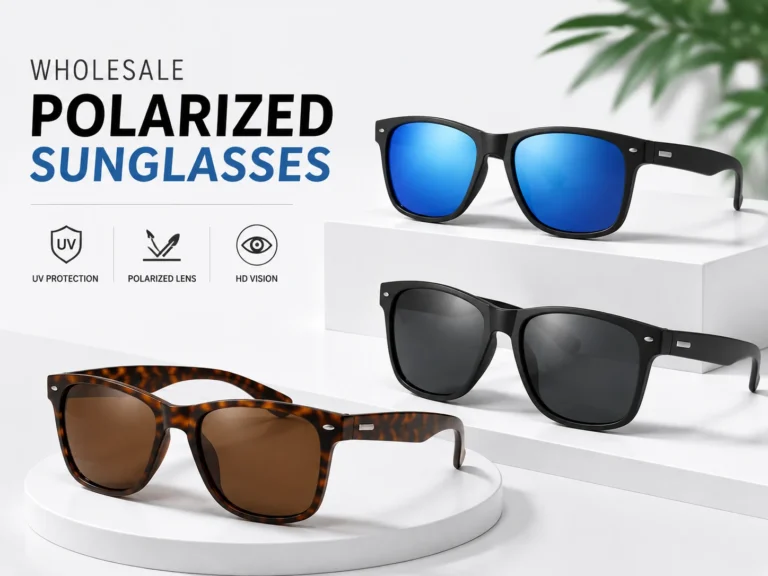

For retailers, sunglasses are both a fashion accessory and a product with practical optical functions. While frame design often attracts the most attention, lens quality can have a significant impact on customer experience. This makes lens evaluation an important part of wholesale purchasing.
When sourcing Wholesale Polarized Sunglasses, retailers should look beyond the appearance of the frames. Polarization, UV protection, optical clarity, lens material, tint, and manufacturing consistency are all factors worth reviewing before committing to a large order.
What Makes Lens Quality Important?
Sunglasses are designed to reduce the effects of bright light and provide visual comfort in outdoor conditions. Poorly manufactured lenses may affect clarity, consistency, and the overall experience of wearing the product.
For retailers, consistent lens quality can also influence customer trust. Products that perform as expected are more likely to meet reasonable customer expectations and support a positive shopping experience.
Understand How Polarization Works
Polarized lenses contain a filter that reduces certain types of reflected glare. This can be useful when customers are near reflective surfaces such as water, roads, or snow.
However, polarization should not be confused with UV protection. A retailer should verify both features separately and rely on accurate supplier specifications rather than assuming that all polarized sunglasses provide the same level of protection.
Check UV Protection
UV protection is one of the most important specifications retailers should investigate when purchasing sunglasses. Exposure to ultraviolet radiation can be harmful to the eyes, making appropriate protection an important consideration for consumers.
Retailers should request clear information about the UV protection provided by the lenses and confirm that product claims are supported by appropriate documentation or testing.
Look for Optical Clarity
Lens clarity can affect how comfortably customers see through sunglasses. Uneven tinting, visual distortion, scratches, or manufacturing imperfections can reduce the perceived quality of a product.
When evaluating samples, retailers should inspect lenses carefully under suitable lighting. Checking multiple samples can also help identify whether quality remains consistent across different products.
Consider Lens Materials
Different lens materials can provide different combinations of weight, impact resistance, optical performance, and cost. The appropriate choice depends on the intended product positioning and customer expectations.
Retailers should ask suppliers about the materials used and determine whether they are suitable for the intended market. Material information can also help businesses create more accurate product descriptions.
Evaluate Lens Tint
Lens tint affects both the appearance of sunglasses and the way they are perceived by customers. Gray, brown, green, and other tints may be available across different collections.
Retailers should consider whether the tint is consistent and appropriate for the product’s intended use. Fashion-oriented collections may place greater emphasis on color, while outdoor-focused products may require more attention to functional specifications.
Inspect Lens and Frame Alignment
Even high-quality lenses can appear poorly finished if they are not properly fitted into the frame. Retailers should check whether lenses sit securely and evenly within their frames.
Misalignment, loose fitting, or inconsistent finishing can affect the appearance and perceived quality of the finished product. Sample inspections are therefore useful before placing larger orders.
Consistency Matters in Wholesale Orders
When purchasing large quantities, retailers need products to maintain a consistent standard from one unit to another. Variations in tint, polarization, lens fitting, or surface quality can create problems with customer satisfaction.
Ask suppliers about their quality-control procedures and how they inspect finished products before shipment. A clear quality-control process can reduce the risk of receiving inconsistent inventory.
Ask for Product Documentation
Suppliers should be able to provide relevant information about the sunglasses they manufacture or distribute. Depending on the market and product, documentation may cover lens specifications, UV protection, materials, testing, or applicable standards.
Retailers should keep appropriate documentation for their records and avoid publishing technical claims that cannot be verified.
Consider the Intended Customer
Not every sunglasses customer has identical priorities. A fashion shopper may focus heavily on color and appearance, while an outdoor enthusiast may place greater importance on glare reduction, coverage, and lens performance.
A well-planned collection can serve both groups by combining attractive frame designs with reliable lens specifications.
Test Samples Before Bulk Purchasing
Sample testing gives retailers an opportunity to assess products before investing in substantial quantities. Examine the lenses for clarity, consistency, scratches, fitting, tint uniformity, and overall finish.
It can also be helpful to compare samples from multiple suppliers using the same criteria. This creates a more objective basis for determining which products meet the retailer’s standards.
Consider Long-Term Supplier Reliability
Lens quality should be consistent not only in the first order but also in subsequent shipments. Retailers establishing a long-term relationship with suppliers such as Eugenia Eyewear should consider product consistency, documentation, quality control, communication, and ordering terms.
A dependable supplier can make it easier to maintain consistent standards as the retail assortment grows.
Avoid Choosing Solely on Price
Lower wholesale pricing can be attractive, but it should not be the only factor used to evaluate sunglasses. A cheaper product may create additional costs if it has higher defect rates, inconsistent quality, or limited customer appeal.
Instead, retailers should consider the relationship between total cost, quality, expected retail price, and customer satisfaction.
Final Thoughts
Lens quality is a key consideration when sourcing polarized sunglasses for retail. Polarization, UV protection, optical clarity, materials, tint, fitting, and manufacturing consistency can all influence the value of a product.
By requesting accurate specifications, inspecting samples, comparing suppliers, and monitoring quality across orders, retailers can make more informed purchasing decisions. A careful approach to lens quality can help create a sunglasses collection that meets customer expectations while supporting responsible inventory management.