
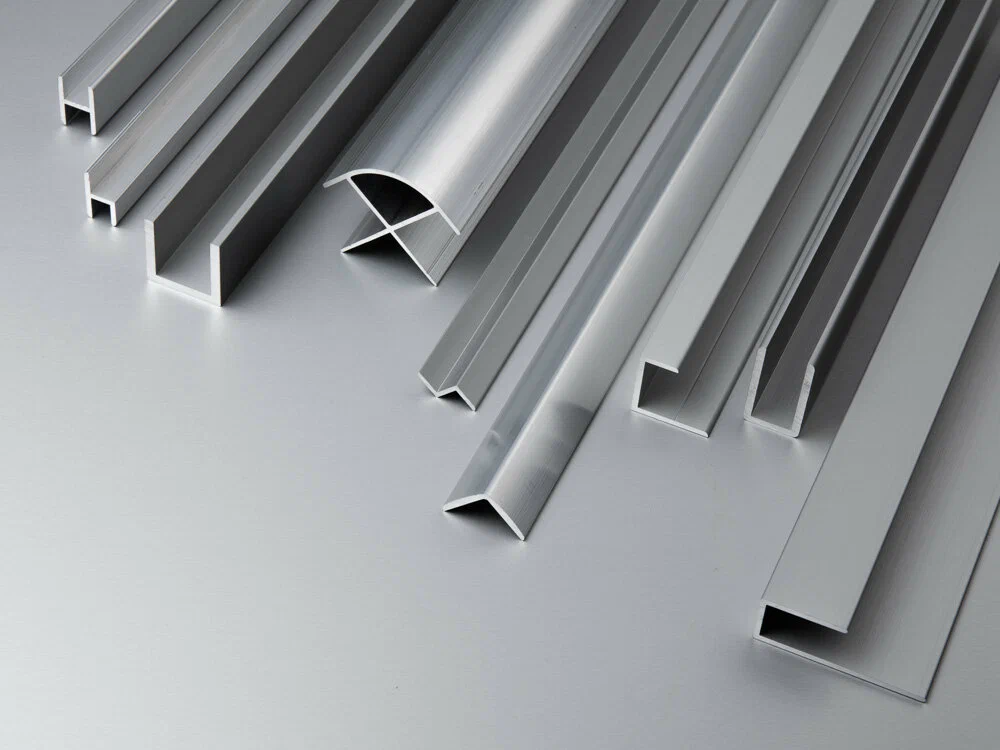

Modern manufacturing demands components that fit accurately, perform reliably, and adapt to different applications. Aluminium profiles meet these requirements because aluminium can be shaped into detailed cross sections while retaining useful strength, low weight, corrosion resistance, and design flexibility. This manufacturing approach makes it possible to create repeatable shapes suited to specific functional and structural needs.
From construction systems and HVAC components to solar equipment and industrial machinery, extrusion provides a practical way to transform aluminium into application-focused components.
What is Aluminium Extrusion?
Aluminium extrusion is a manufacturing process in which an aluminium alloy billet is heated and pushed through a die containing the required opening. As the material passes through the die, it takes on its cross-sectional shape. The resulting length can then be cooled, cut, finished, and processed according to the application.
Unlike conventional cutting methods that remove material to achieve a shape, extrusion forms the profile directly. This can reduce unnecessary waste while allowing manufacturers to create complex sections, including channels, hollow shapes, fins, angles, and other geometries.
The Role of the Extrusion Die
The die is central to profile precision. Its opening determines the shape, dimensions, wall thickness, and internal features of the finished extrusion. A carefully engineered die helps maintain consistency throughout production.
For specialized requirements, die design can consider load requirements, assembly methods, available space, finishing needs, and performance expectations before production. Proper engineering is especially important for thin walls, intricate cavities, or multiple functional surfaces.
How the Process Creates Consistent Shapes
Precision begins with selecting an appropriate aluminium alloy and preparing the billet for extrusion. Controlled heating makes the material sufficiently workable without compromising the desired properties. The billet is then forced through the die under controlled pressure.
Once extruded, the profile is cooled, straightened, and cut to required lengths. Each stage contributes to dimensional consistency. Careful control of temperature, extrusion speed, pressure, cooling, and handling helps reduce variations that could affect assembly or performance.
Design Flexibility for Different Applications
One of the biggest advantages of extrusion is its ability to produce shapes tailored to different needs. A construction component may require a profile with grooves for joining or mounting. An HVAC component may need fins that support heat transfer. A solar application may require channels designed for secure installation.
Industrial machinery can use profiles that integrate mounting points, supports, covers, or reinforcement into one section. Combining functions can simplify assembly and reduce separate components.
From Simple to Complex Geometries
Extrusion can create far more than basic rectangular or circular sections. It can produce hollow shapes, channels, slots, angles, fins, and other geometrical configurations based on specific requirements. These aluminium extrusion profiles can combine multiple functions within one component, reducing the need for separate parts.
However, complex designs require careful engineering. Factors such as uneven wall thickness, thin sections, sharp transitions, and internal cavities can affect manufacturability. Designing with extrusion capabilities in mind helps achieve accurate, practical, and consistent results.
Precision After Extrusion
The extrusion process establishes the basic profile, but additional processing can refine it further. Machining operations such as cutting, milling, drilling, punching, and bending can modify an extruded component for its final application. These processes can create holes, slots, connection points, precise lengths, or other features required for assembly.
This combination moves a formed section toward an application-ready component and can improve production efficiency.
Surface Finishing for Performance and Appearance
After shaping and machining, surface treatment can provide additional functional and visual benefits. Anodizing can enhance surface characteristics and appearance, while powder coating can provide a durable finish in a wide range of colours.
The right finish depends on the component’s environment and purpose. Architectural applications may prioritize appearance, while industrial uses may emphasize durability and protection. Choosing an appropriate treatment helps ensure that the finished profile suits its operating conditions.
Quality Control and Dimensional Accuracy
Consistent quality is essential when profiles must fit into assemblies or operate as part of larger systems. Quality control throughout manufacturing helps identify dimensional deviations and production issues before products reach the customer.
Inspection can cover material characteristics, dimensions, surface condition, finishing, and other application specifications. Structured quality control supports repeatable production.
Applications Across Multiple Industries
The versatility of extrusion explains its use across numerous sectors. Construction and architectural projects use profiles for frames, structural elements, facades, and other systems. Automotive manufacturers can use lightweight sections for components where weight reduction and strength are important.
In solar and renewable energy applications, extruded sections can support mounting and structural requirements. HVAC and refrigeration equipment can use specially shaped components for functional and thermal applications. Electrical and electronic products may require compact profiles that provide protection, support, or heat-management features.
Benefits of Custom Aluminium Extrusion
Custom extrusion can offer several practical advantages. It allows designers to create a profile around the actual requirements of a product rather than adapting a design to an available stock section. This can support better space utilization, simplify assembly, reduce component counts, and improve overall product integration.
Customization can also support aesthetic requirements through visible surfaces, concealed channels, or specific dimensions that complement the final product. This flexibility helps specialized equipment achieve differentiated designs.
Why Precision Matters
Small dimensional variations can become significant when multiple components must connect accurately. A profile that is slightly oversized, undersized, or incorrectly shaped may cause assembly difficulties, gaps, misalignment, or performance problems.
Precision therefore affects more than appearance. It can influence structural stability, thermal performance, installation time, maintenance, and product reliability. Consistent extrusion helps manufacturers achieve predictable results, particularly when components are produced repeatedly at scale.
Conclusion
The strength of extrusion lies in its combination of flexibility, repeatability, and efficient material shaping. By using engineered dies, controlled processing, machining, finishing, and quality checks, manufacturers can create aluminium profiles that match the practical requirements of different industries and applications. Whether the goal is lightweight construction, specialized machinery, solar systems, HVAC equipment, or precision components, extrusion provides a versatile route from design concept to dependable finished product.
For reliable manufacturing, customized designs, and application-specific solutions, JM Aluminium supports businesses with end-to-end aluminium solutions, from extrusion and customized profile development to machining, anodizing, powder coating, and quality control. Their capabilities help deliver precise components for construction, automotive, solar, HVAC, industrial, electrical, and other applications. With engineering-focused production and finishing expertise, they help customers achieve dependable profiles tailored to specific performance and design requirements with consistent quality.