
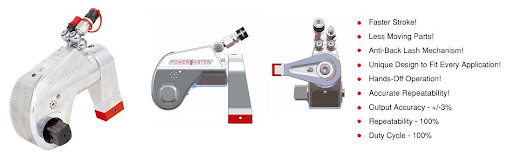

When we talk about the heavy industry, it is clear that large bolts require considerable effort to be secured safely. This is why the hydraulic torque tool becomes extremely important in such situations as it guarantees the perfect power application to provide tight joints and avoid structure failure.
Delve through this guide to learn how these specialized tools work, their core industrial benefits, and how to choose the right bolt tool for high-pressure environments.
Why Standard Tools Fail Under High Pressure
In heavy industry such as:
- Oil and gas sector
- Power generation plants
- Mining operations
There are huge amounts of force and heat generated in operation. Manual or impact wrenches are not capable of achieving the even tension that is needed. Bolts that are loose will result in leakage of gas or fluid from the equipment.
Key Benefits of Hydraulic Torque Tools
The use of such hydraulic machines provides several benefits to any large-scale construction site:
- Accuracy and Precision: The machines provide an accuracy ratio of +/- 3% so that each and every bolt will bear the same load.
- Powerful Torque: They can generate tens of thousands of pounds of torque using hydraulic pumps.
- Safety: The machines are operated by remote control systems, keeping the operator away from high-tension parts.
Comparing Tightening Methods
To see why hydraulics dominate high-pressure environments, look at how they compare to traditional methods:
| Feature | Manual Torque Wrenches | Impact Wrenches | Hydraulic Torque Systems |
| Torque Capacity | Low (Limited by human strength) | Medium (Inaccurate output) | High (Up to 50,000+ ft-lbs) |
| Accuracy Level | Poor to Fair | Very Poor | Excellent (+/- 3%) |
| Physical Effort | Extremely High | High Vibration | Very Low (Pump driven) |
| Safety Risk | High (Slippage/Strain) | High (Vibration/Loud noise) | Low (Remote operation) |
Low-Profile vs. Square-Drive Designs
Hydraulic tightening machines typically are available in two types according to the amount of clearance available in the joint:
1. Square Drive Hydraulic Tools
They are similar to regular impact sockets in appearance, except that they are powered by a hydraulic piston. They are very versatile and suited for situations in which there is sufficient room, allowing the tool to be placed directly on the bolt head.
2. Low Profile Hex Tools
In cases where there is limited clearance available, such as on narrow pipe flanges or machinery, low profile tools will fit directly over the nut without the use of an impact socket.
Critical Safety Practices That Needs To Be Considered
When working with high pressure, it is necessary to strictly follow safety procedures to ensure safety of both personnel and equipment:
- Check Hose Daily: Lines are subjected to very high pressure; even one small pinhole could seriously hurt someone.
- Calibrate Frequently: Equipment should be calibrated on a yearly basis to ensure tight torque control.
- Use Correct Pump: Always use a properly calibrated pump for that specific tool.
Final Thoughts
High pressure systems require complete accuracy, which means that the proper choice of equipment is essential. Purchase a hydraulic torque tool to ensure that your joints stay intact even in the toughest industrial environment. By choosing the appropriate bolt tool setup, you can be sure that your joints will stay together, and your employees will be safe.