
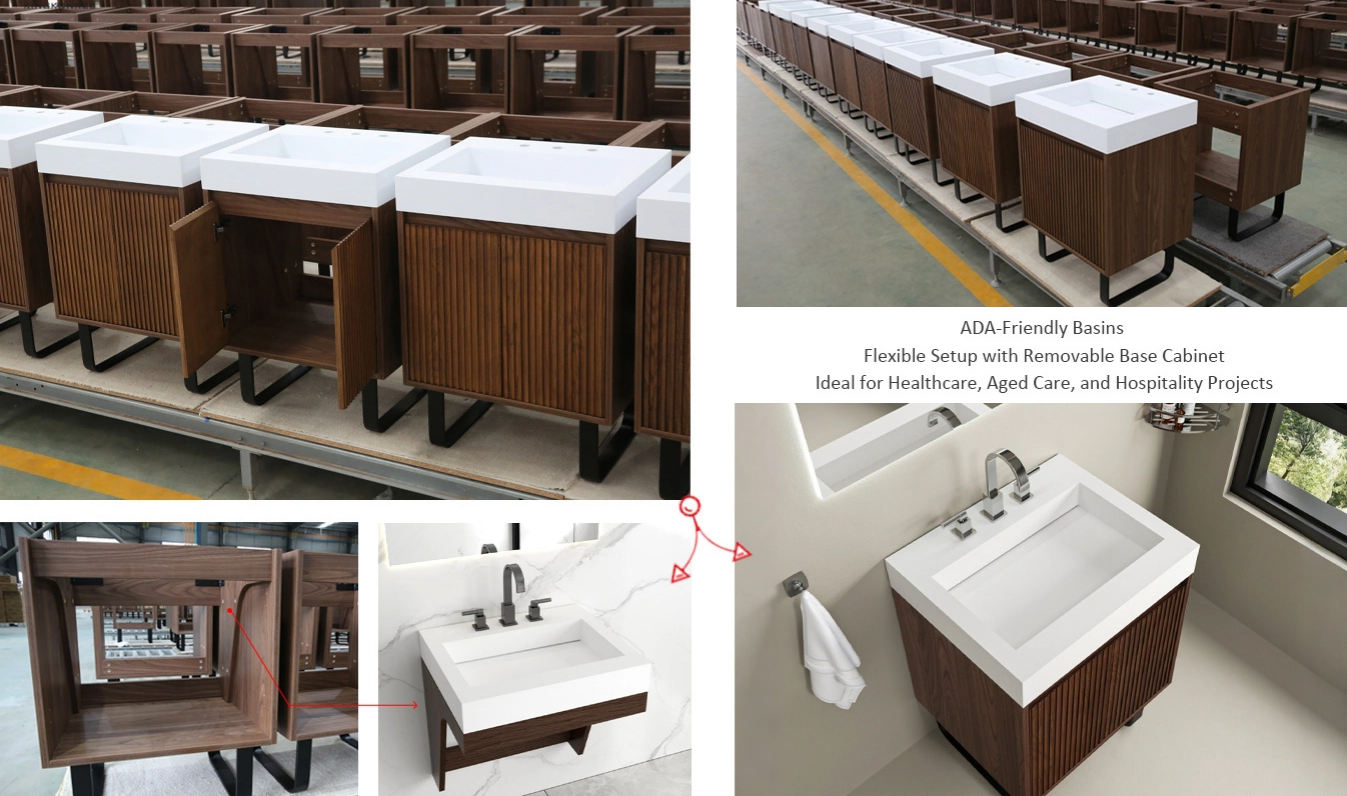

Investing in ADA-compliant sinks requires careful evaluation of both upfront expenses and long-term value. Whether the project involves a residential renovation, a healthcare facility, or a large commercial development, cost considerations extend beyond the initial purchase price. KingKonree ADA sinks are designed to meet accessibility standards while delivering durability, aesthetic appeal, and operational efficiency. Understanding the financial aspects associated with these sinks helps property owners and project managers make informed decisions.
Initial Purchase Price and Material Quality
The base price of an ADA sink can vary depending on material, size, configuration, and customization options. KingKonree uses premium solid surface materials, composite stone, and high-grade stainless steel to ensure durability and performance. While these materials may carry a higher upfront cost compared to basic ceramic or lightweight alternatives, they provide greater resistance to impact, staining, and long-term wear.
When evaluating overall value, ADA Sinks from KingKonree often reflect a balance between competitive pricing and superior material construction. Rather than focusing solely on short-term savings, many facility planners consider the extended lifespan and reduced maintenance requirements these sinks provide. High-quality materials help minimize repairs, refinishing, and premature replacements, ultimately influencing total cost over time.
Installation Expenses and Compliance
Installation costs are another key factor in budgeting for ADA sinks. Proper mounting height, knee clearance, and plumbing insulation must meet ADA guidelines. Sinks that are not precisely engineered for compliance may require additional modifications during installation, increasing labor expenses.
KingKonree designs its ADA sinks with compliance-ready dimensions, helping reduce the need for extensive adjustments. Wall-mounted and integrated counter models are structured to simplify installation while maintaining required clearances. Clear technical specifications and structured design help contractors complete installations efficiently, lowering overall labor costs.
Maintenance and Cleaning Costs
Long-term maintenance is a major financial consideration, especially in commercial settings with high daily traffic. Non-porous solid surface materials used in KingKonree sinks resist stains and bacterial buildup, reducing the frequency and intensity of cleaning. Seamless construction also prevents dirt accumulation in joints, further lowering maintenance demands.
Compared to sinks made from porous or easily damaged materials, KingKonree ADA sinks typically require fewer repairs and less frequent refinishing. Over time, this reduction in maintenance labor and cleaning supplies contributes to cost savings, particularly in large facilities such as hospitals, airports, and office complexes.
Durability and Lifecycle Value
The durability of an ADA sink significantly affects its overall cost efficiency. In high-use environments, sinks may be exposed to constant water flow, cleaning chemicals, and accidental impacts. KingKonree’s robust materials maintain structural integrity under demanding conditions.
A longer product lifespan means fewer replacements, which reduces both material and labor costs over the years. Property owners often consider lifecycle value when comparing brands, recognizing that a slightly higher upfront investment can lead to substantial savings in the long term.
Customization and Design Flexibility
Customization options can influence cost, especially when projects require specific dimensions, integrated counters, or unique finishes. KingKonree offers design flexibility while maintaining ADA compliance, allowing sinks to align with architectural requirements.
Integrated counter models may involve higher production costs due to their seamless construction, but they provide added durability and aesthetic benefits. These design enhancements often contribute to overall property value, particularly in hospitality and corporate environments where visual presentation is important.
Water Efficiency and Operational Savings
Water-efficient design is another cost-related consideration. KingKonree ADA sinks are compatible with low-flow and sensor-operated faucets, supporting reduced water consumption. Controlled water flow not only conserves resources but also lowers utility expenses.
In large facilities with multiple restroom installations, the cumulative savings from water-efficient fixtures can be significant. Over time, reduced water bills contribute to a more sustainable and financially efficient operation.
Budget Planning for Residential vs. Commercial Projects
Cost priorities may differ between residential and commercial settings. In residential bathrooms, long-term comfort, durability, and aging-in-place considerations often guide purchasing decisions. In commercial projects, compliance, maintenance efficiency, and operational reliability typically take precedence.
KingKonree ADA sinks accommodate both contexts by providing scalable options that address varying budget levels and performance expectations. Whether installed in a private home or a public facility, these sinks offer a combination of accessibility and lasting value.
Conclusion
Cost considerations when evaluating KingKonree ADA sinks involve more than the initial purchase price. Material quality, installation efficiency, maintenance demands, durability, customization options, and water-saving compatibility all contribute to total value.
By focusing on long-term performance and compliance, ADA sinks from KingKonree provide a cost-effective solution for accessible bathroom design. Their durable construction and thoughtful engineering support both financial efficiency and inclusive functionality, making them a practical investment for residential and commercial environments alike.