
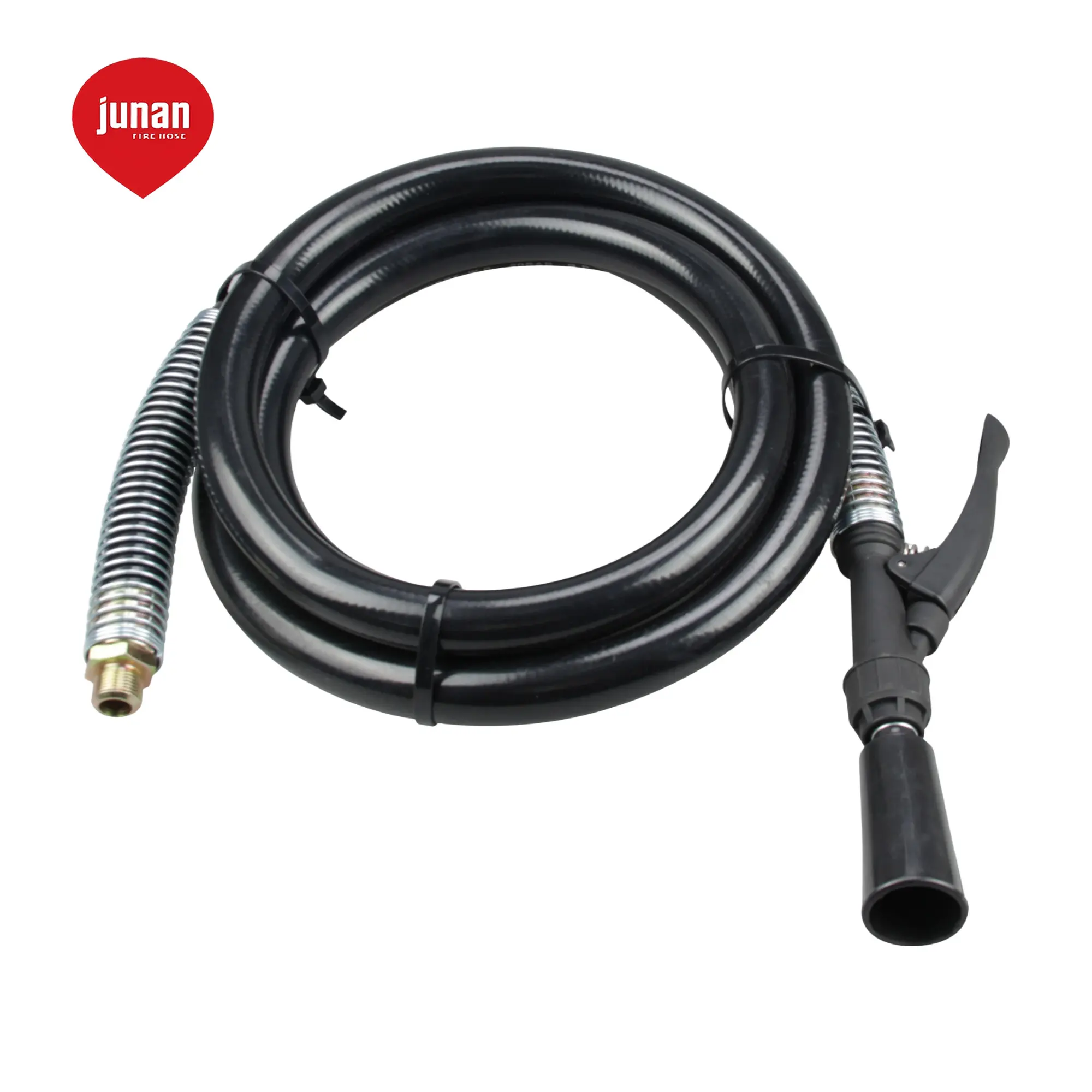

Water transfer is an essential requirement across many industries, including construction, agriculture, manufacturing, firefighting, and municipal services. These operations often depend on flexible equipment capable of transporting water efficiently between pumps, storage tanks, pipelines, and discharge points. A discharge hose provides a practical solution where fixed piping is unsuitable or where temporary water delivery is required. Its construction, pressure capacity, and material properties determine how effectively it performs under different working conditions.
A Water Discharge Hose is a flexible tube designed to carry water from a pump or supply source to a designated outlet. It is commonly used in applications involving drainage, irrigation, construction dewatering, industrial water transfer, and certain firefighting arrangements. Unlike suction hoses, which are designed to withstand negative pressure while drawing liquid into a pump, discharge hoses are primarily engineered to handle positive internal pressure during water delivery.
Understanding Water Discharge Hose Construction
The construction of a discharge hose affects its strength, flexibility, durability, and resistance to operating pressure. Most designs combine an inner lining, reinforcement layer, and protective outer cover.
1. Inner Lining
The inner lining creates a smooth passage for water and helps prevent leakage. It is commonly manufactured from rubber, PVC, or other synthetic materials. The selected compound should resist deterioration caused by water exposure, temperature changes, and any additional substances that may be present in the transferred liquid.
2. Reinforcement Layer
The reinforcement provides structural support and helps the hose maintain its shape under pressure. Depending on the product design, manufacturers may use woven synthetic textile, spiral reinforcement, or other strengthening structures. The reinforcement material and construction influence the hose’s flexibility and pressure-handling capability.
3. Outer Cover
The outer cover protects the hose from abrasion, dirt, sunlight, moisture, and mechanical contact. Industrial hoses may include specialized coatings or compounds to improve resistance to particular environmental conditions. The appropriate cover depends on the location and frequency of use.
Pressure Capacity and Performance Ratings
Pressure capacity is one of the most important specifications to evaluate when selecting a discharge hose. It indicates the pressure conditions under which the hose is designed to operate safely.
Several pressure terms are commonly used:
- Working pressure: The maximum pressure specified for normal operation under defined conditions.
- Proof pressure: A test pressure used to evaluate the hose’s ability to withstand a prescribed pressure level.
- Burst pressure: The pressure at which the hose fails during controlled testing.
These values serve different purposes and should not be treated as interchangeable. A suitable hose should have a working pressure rating that meets the actual requirements of the pumping system, with appropriate consideration for pressure fluctuations and operating conditions.
Pressure performance is also affected by hose diameter, length, temperature, reinforcement quality, and the condition of fittings. Sudden valve closure or pump changes can create pressure surges, sometimes called water hammer. System designers should account for these effects when specifying hoses and connected equipment.
Common Types of Water Discharge Hoses
Different hose designs are available to support particular operating requirements.
Layflat Discharge Hoses
Layflat hoses can be rolled or folded when empty, making them convenient to transport and store. They expand when water flows through them and are frequently used for temporary water transfer, drainage, and agricultural operations.
Rubber Discharge Hoses
Rubber hoses are commonly selected for applications requiring flexibility and resistance to repeated handling. Their performance depends on the rubber compound, reinforcement, and specified pressure rating.
PVC Discharge Hoses
PVC hoses are often lightweight and economical. They are suitable for many general-purpose water transfer applications, provided their pressure, temperature, and environmental limitations are respected.
Reinforced Industrial Hoses
These hoses use additional reinforcement to support more demanding operating conditions. They may be used in industrial pumping arrangements, construction sites, and other applications where greater structural strength is required.
Industrial and Commercial Applications
Water discharge hoses support a wide range of operations because they can be connected to portable or stationary pumping equipment.
Construction and dewatering: Construction teams use discharge hoses to move accumulated groundwater or rainwater away from excavations, foundations, and work areas.
Agriculture and irrigation: Farmers use suitable hoses to transport water from pumps, storage tanks, and supply channels to irrigation points.
Manufacturing facilities: Industrial operations may require water transfer for equipment cooling, cleaning, processing, and general facility maintenance.
Municipal services: Water management teams may use discharge hoses for drainage, flood response, and temporary pumping operations.
Fire protection: Approved discharge hoses are used in certain firefighting systems to deliver water from pumps or hydrants to suitable outlets. Their specifications must match the requirements of the fire protection installation.
Factors to Consider When Selecting a Discharge Hose
Selecting the correct hose begins with identifying the operating requirements. Consider the following factors:
- Required flow rate: Choose an appropriate diameter to support the intended water volume while limiting unnecessary friction losses.
- Pressure requirements: Confirm that the working pressure rating is suitable for the pump and system conditions.
- Material compatibility: Select a lining that is appropriate for the liquid being transported.
- Operating environment: Consider sunlight, abrasion, chemicals, temperature, and exposure to heavy equipment.
- Length and flexibility: Ensure the hose can reach the discharge point without excessive bending, twisting, or strain.
- Connection compatibility: Check that couplings, fittings, and clamps match the connected equipment.
Reviewing these specifications together helps avoid selecting a hose that performs well in one area but fails to meet another essential requirement.
Maintenance and Storage Guidelines
Regular inspection helps preserve hose condition and reduce unexpected failures. Check for cracks, leaks, bulges, worn surfaces, exposed reinforcement, and damaged connections. Hoses should be cleaned after use and dried according to manufacturer recommendations.
Store them away from direct sunlight, excessive heat, sharp objects, and incompatible chemicals. Avoid placing heavy equipment on stored hoses or leaving them tightly compressed for extended periods. Damaged products should be removed from service until assessed by qualified personnel.
Conclusion
Water discharge hoses are valuable components in industrial, agricultural, construction, municipal, and firefighting operations. Their performance depends on suitable construction, reliable reinforcement, correct pressure capacity, and compatibility with connected equipment. By evaluating operating conditions carefully and following appropriate inspection and storage practices, users can improve water transfer reliability and extend hose service life.