

Scaffolding provides temporary access and working platforms for construction, maintenance, and repair activities. However, a basic scaffold frame alone is not enough to create a complete and functional working structure. Additional components are needed to improve stability, provide safe access, protect workers from falls, and support everyday site operations.
Choosing the right Scaffolding Accessories helps contractors configure equipment according to project requirements and working conditions. Components such as base jacks, guardrails, diagonal braces, platforms, ladders, and toe boards each serve a specific purpose. When selected and installed correctly, these accessories contribute to a more organized scaffold arrangement and help maintain safer working conditions.
Why Scaffolding Accessories Are Important
Scaffolding accessories are supplementary components designed to improve the functionality, stability, and safety of scaffold systems. They help connect structural members, support working platforms, provide access, and protect personnel during elevated activities.
The exact accessories required depend on the scaffold type, installation height, site conditions, and intended work.
Their importance can be understood through several key functions:
- Structural support: Components such as base plates and braces help maintain the intended scaffold arrangement.
- Worker protection: Guardrails and toe boards help reduce fall and falling-object hazards.
- Safe access: Ladders and stair units provide designated routes between working levels.
- Work efficiency: Proper platforms and compatible fittings help organize daily construction activities.
- Equipment durability: Suitable connections and protective components support reliable equipment use.
Accessories should always be compatible with the scaffold system and used according to manufacturer instructions and approved designs.
Essential Scaffolding Accessories for Construction Sites
Different accessories serve different functions within a scaffold structure. Understanding their applications helps contractors select the components required for each project.
1. Base Plates and Adjustable Base Jacks
Base plates and adjustable base jacks are positioned at the bottom of scaffold standards to transfer loads to the supporting surface.
Base plates provide a suitable bearing interface, while adjustable jacks allow limited height adjustment to accommodate ground-level variations.
Their main functions include:
- Supporting vertical standards.
- Helping distribute loads over suitable bearing surfaces.
- Accommodating minor level differences.
- Supporting proper scaffold alignment.
The supporting ground must still be capable of carrying the imposed loads. Where required, sole boards or other foundation arrangements should be provided according to the scaffold design.
2. Diagonal Braces
Diagonal braces are important structural components used to improve scaffold rigidity.
They connect scaffold members diagonally, helping control movement and maintain the intended structural geometry.
Braces are particularly important in multi-level scaffold arrangements and structures exposed to lateral forces.
Their location and installation should follow the manufacturer’s specifications and the approved scaffold design. Removing or changing braces without proper authorization can compromise structural stability.
3. Guardrails and Midrails
Guardrails are installed along exposed platform edges to help prevent workers from falling.
Midrails provide an additional protective barrier between the upper guardrail and the platform level.
These components are essential parts of fall-prevention arrangements wherever required by applicable regulations.
A complete edge-protection system should be installed correctly and maintained throughout the period of scaffold use.
4. Toe Boards
Toe boards are positioned along platform edges to reduce the risk of tools, materials, and other objects falling from elevated working areas.
They are especially useful on sites where several teams work at different levels or where people move beneath scaffold structures.
Toe boards should be securely fitted and used alongside other required falling-object protection measures.
5. Scaffold Platforms and Planks
Platforms provide the actual working surfaces used by construction personnel.
They may be manufactured from steel, aluminum, or other approved materials, depending on the scaffold system and intended application.
When selecting platforms, contractors should consider:
- Load capacity and intended duty rating.
- Platform dimensions.
- Surface condition and slip resistance.
- Compatibility with supporting members.
- Secure positioning and retention.
- Suitability for outdoor working conditions.
Platforms should be properly supported, secured, and inspected before use. Damaged or unsuitable boards should be removed from service.
6. Scaffold Ladders and Stair Units
Safe access is necessary whenever workers need to move between scaffold levels.
Ladders and stair units provide designated access routes and help prevent workers from climbing structural frames or using unsuitable components.
Stair units may be particularly useful on projects where workers frequently carry tools or materials between working levels.
Access equipment should be installed according to the system design, with suitable landings and clear routes maintained throughout the work period.
7. Couplers and Clamps
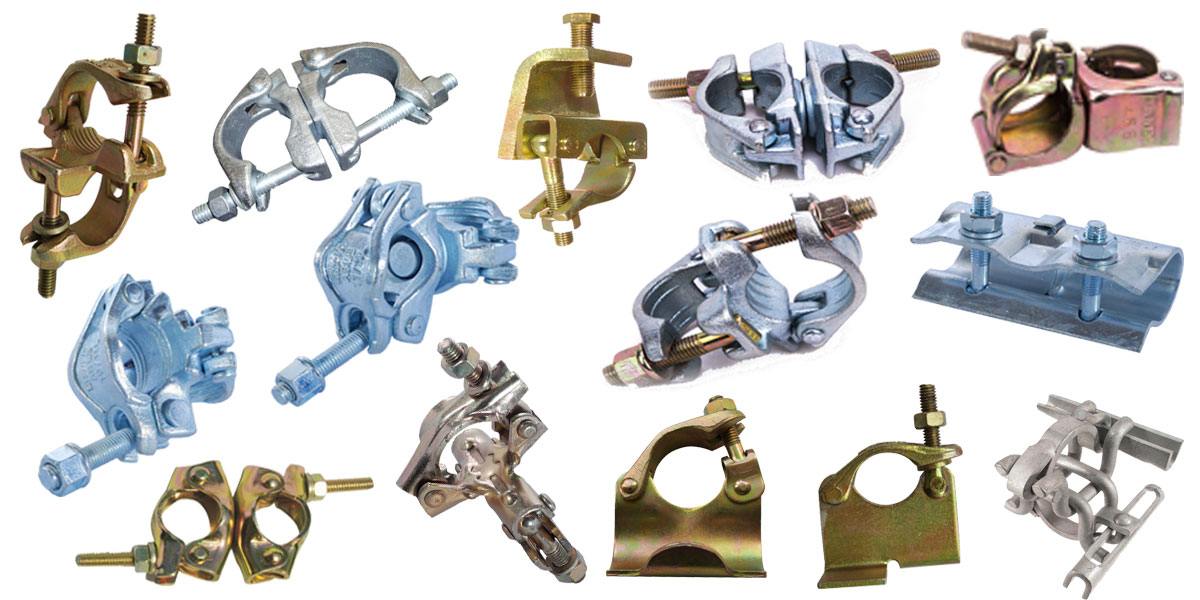
Couplers connect scaffold tubes and help create the required structural arrangement in tube-and-coupler systems.
Different coupler types are designed for specific connection functions, including right-angle connections, swivel connections, and joining tubes end to end.
Their selection should reflect the connection requirements and manufacturer specifications.
Couplers must be inspected for wear, deformation, corrosion, and damaged fastening mechanisms. Incompatible or defective fittings should never be used.
8. Scaffold Ties and Anchoring Components
Scaffold ties connect the structure to a suitable supporting building or framework where required by its design.
They help resist lateral movement and contribute to the stability of the overall installation.
Anchoring arrangements must be designed for the actual supporting structure and expected forces. Improvised attachments or unsuitable fixing points can create serious structural risks.
Choosing Accessories for Different Scaffold Systems
Not every accessory is suitable for every scaffold arrangement. Component compatibility is an important consideration when planning equipment purchases.
Frame Scaffolding
Frame scaffolding commonly uses prefabricated frames and cross braces.
Typical accessories include:
- Base plates and adjustable jacks.
- Compatible platforms.
- Guardrails and toe boards.
- Access ladders.
- Frame connection pins and locking devices.
These components should match the dimensions and connection arrangements of the frame system.
Ringlock Scaffolding
Ringlock systems use rosette connection plates fitted to vertical standards.
Accessories may include compatible ledgers, diagonal braces, platform units, guardrails, stair components, and base jacks.
Because the system relies on specific connection geometries, buyers should confirm that all components are manufactured for the same compatible system.
Cuplock Scaffolding
Cuplock systems use cup-based connection mechanisms to secure horizontal members to vertical standards.
Compatible accessories can include ledgers, braces, platforms, base jacks, and access components.
The connection arrangement should be checked carefully before purchasing replacement parts or combining equipment from different sources.
Tube-and-Coupler Scaffolding
Tube-and-coupler systems depend on individual fittings to connect structural tubes.
Common accessories include right-angle couplers, swivel couplers, sleeve couplers, base plates, and platform supports.
Correct coupler selection and installation are particularly important because each connection contributes to the intended scaffold arrangement.
How to Select the Right Scaffolding Accessories
Selecting suitable accessories requires more than checking availability or comparing prices. Contractors should assess the complete scaffold arrangement and identify which components are necessary for safe operation.
Consider the Project Requirements
Start by identifying the work activities, working heights, platform arrangements, and expected loads.
A project involving exterior painting may have different access and platform requirements from industrial maintenance or heavy construction work.
Understanding these requirements helps prevent unnecessary purchases and missing components.
Check System Compatibility
Accessories should be designed for the scaffold system in use.
Differences in dimensions, connection details, and locking mechanisms can prevent components from fitting correctly or performing as intended.
Before purchasing replacement parts, confirm the manufacturer’s specifications and compatibility information.
Evaluate Material Quality
Accessories are commonly manufactured from steel, aluminum, and other materials selected for their intended functions.
Steel components are often used where strength and durability are important. Aluminum accessories may be preferred where reduced weight is beneficial.
Buyers should review material grades, dimensions, manufacturing quality, and protective finishes before making a decision.
Review Load Ratings
Platforms, brackets, and other load-bearing accessories must be suitable for the intended loads.
Contractors should follow product ratings and approved design documentation rather than estimating capacity from component size or appearance.
Examine Corrosion Protection
Outdoor equipment may be exposed to moisture and changing weather conditions.
Galvanized steel accessories can offer improved corrosion resistance, while other protective finishes may be appropriate for different applications.
The selected treatment should match the expected environmental exposure and maintenance requirements.
The Role of Accessories in Improving Worksite Safety
Scaffold accessories contribute to safety by addressing specific hazards associated with elevated work.
Guardrails and toe boards help protect platform edges and reduce falling-object risks. Braces and ties support the structural arrangement, while suitable access components provide designated routes between levels.
However, no single accessory can make an improperly designed or installed scaffold safe.
A complete safety approach should include:
- A suitable scaffold design based on project conditions.
- Correct component selection and compatibility.
- Installation by trained and competent personnel.
- Appropriate fall protection and safe access.
- Regular inspections by competent individuals.
- Proper housekeeping and control of platform loading.
Workers should also receive instruction on the correct use of the scaffold and understand which components must not be removed or altered without authorization.
Maintenance and Inspection of Scaffolding Accessories
Accessories are frequently handled during scaffold assembly, dismantling, transportation, and storage. Repeated use can lead to wear and damage, making regular inspection essential.
A practical maintenance routine should include checking:
Base plates and jacks: Look for damaged threads, deformation, corrosion, and other defects that could affect adjustment or support.
Braces and couplers: Examine locking mechanisms, fastening points, and connection surfaces for excessive wear or damage.
Platforms: Check for cracks, bending, damaged fittings, and unsafe surface conditions.
Guardrails and toe boards: Confirm that components are complete, securely fitted, and free from significant deformation.
Ladders and stairs: Inspect steps, joints, supports, and attachment points.
Defective accessories should be clearly identified and removed from service until they have been assessed. Repairs should only be carried out using approved methods.
Proper storage also helps protect equipment. Accessories should be sorted by type and kept in suitable conditions that reduce unnecessary moisture exposure and physical damage.
How Quality Accessories Support Long-Term Cost Efficiency
Investing in suitable scaffold accessories can provide value beyond the initial purchase.
Durable components that fit correctly can be reused across multiple projects, provided they remain in safe working condition. Standardized equipment can also simplify inventory management and reduce the risk of purchasing incompatible replacement parts.
Contractors should evaluate the total cost of ownership, including:
- Initial purchase price.
- Expected service life.
- Inspection and maintenance requirements.
- Replacement availability.
- Storage and transportation costs.
- Compatibility with existing equipment.
Selecting reliable accessories can help reduce avoidable equipment losses and support more organized project planning.
Conclusion
Scaffolding accessories play an essential role in turning a basic scaffold structure into a functional and properly equipped working system. Components such as base jacks, braces, guardrails, toe boards, platforms, ladders, couplers, and scaffold ties each contribute to specific structural or operational requirements.
Choosing the right accessories involves evaluating project conditions, load requirements, material quality, corrosion protection, and system compatibility. Equally important are correct installation, regular inspections, and responsible maintenance.
By paying attention to these details, construction professionals can improve scaffold functionality, support safer elevated work, and make more effective use of their equipment across different projects.