
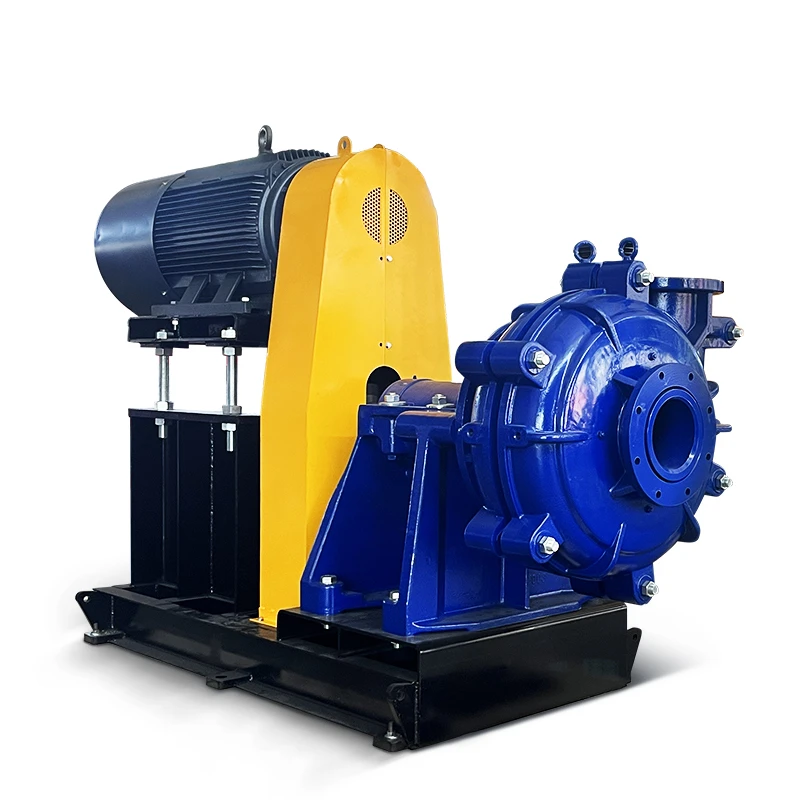

Abrasive slurry applications place demanding requirements on pumping equipment. Mineral particles, sand, tailings, and other solids can gradually wear impellers, casings, liners, seals, and other components. Selecting suitable equipment therefore requires careful attention to both pump design and application conditions.
A qualified Slurry Pump Supplier should understand how particle characteristics, solids concentration, flow requirements, and operating conditions affect pump performance. Evaluating these factors before purchasing can help users select equipment with appropriate wear resistance, hydraulic performance, and maintenance requirements.
Understand the Abrasive Slurry
The first step is to provide detailed information about the slurry. Abrasiveness varies considerably depending on the material being transported.
Important characteristics include:
- Particle size
- Particle hardness
- Solids concentration
- Slurry density
- Particle shape
- Temperature
- Viscosity
- Flow rate
A supplier should use this information when recommending the pump configuration and materials.
Evaluate Wear Resistance
Abrasive particles can continuously impact and slide across wetted pump surfaces. Over time, this can change component dimensions and reduce hydraulic performance.
Ask how the proposed pump addresses wear and which components are most likely to require replacement. Understanding the expected wear areas can also help operators prepare an appropriate maintenance schedule.
Examine Material Options
Material selection is particularly important for abrasive slurry. Components exposed directly to the slurry need suitable mechanical properties for the operating environment.
Depending on the application, different materials may be considered for impellers, casings, liners, and other wetted parts. The supplier should explain the reasoning behind the recommended materials rather than simply offering a standard option.
Consider Replaceable Wear Components
Replaceable liners and other wear components can make maintenance more practical. Instead of replacing the entire casing or major assembly, operators may be able to replace only the component that has reached the end of its service life.
Ask how easily wear components can be inspected and replaced. A maintenance-friendly design can help reduce downtime and repair costs.
Check Hydraulic Performance
Abrasive slurry must be moved efficiently while maintaining the required flow and head. Pump hydraulic design therefore plays an important role in both performance and wear.
Request performance curves and verify that the pump can meet the required duty point. Operating a pump outside its suitable range can increase turbulence, vibration, and component wear.
Review Impeller Design
The impeller directly influences slurry movement through the pump. Its passage dimensions and geometry need to accommodate the characteristics of the solids being handled.
For applications involving larger particles, sufficient passage size can help reduce blockage risks. Proper hydraulic design can also help control particle velocity and impact inside the pump.
Evaluate Casing and Liner Construction
The casing and liners are exposed to slurry flow and may experience significant abrasion. Their thickness, geometry, and material can affect service life.
Ask whether high-wear areas are reinforced or protected and whether liners are designed for straightforward replacement. This information can help estimate long-term maintenance requirements.
Assess Manufacturing Quality
Even a well-designed pump can perform poorly if manufacturing quality is inconsistent. Accurate casting, machining, balancing, and assembly are important for maintaining intended hydraulic and mechanical characteristics.
When evaluating suppliers, ask about:
- Material inspection
- Casting quality
- Machining accuracy
- Component balancing
- Dimensional inspection
- Assembly procedures
- Final testing
Consistent manufacturing can support more predictable component performance.
Ask About Performance Testing
Testing can help verify that the completed pump meets its specified operating requirements. Depending on the application, testing may include flow, head, vibration, leakage, and power consumption.
Ask what testing is performed before shipment and whether test documentation is available. This can provide additional confidence in the equipment’s expected performance.
Consider Energy Consumption
Abrasive slurry pumping can require substantial power, especially when solids concentrations and pipeline resistance are high.
Correct pump sizing helps avoid unnecessary energy consumption. Consider the expected operating point, hydraulic efficiency, motor requirements, and complete pipeline system when comparing equipment.
Review Maintenance Requirements
Abrasive applications generally require more frequent attention than clean-liquid pumping systems. Maintenance requirements should therefore be considered before purchase.
Ask about inspection intervals, wear measurements, lubrication, sealing, and expected component replacement. A clear maintenance plan can help prevent unexpected failures.
Check Spare-Parts Availability
Wear parts are a normal requirement in abrasive slurry applications. Delays in receiving replacement components can extend equipment downtime.
Ask about the availability and lead times of critical parts, including impellers, liners, seals, bearings, and other components. Clear part identification can also make future ordering easier.
Evaluate Technical Support
Technical support can be valuable when selecting, installing, and maintaining slurry pumps. The supplier should be able to provide practical guidance related to the application.
Useful support may include:
- Pump selection
- Installation instructions
- Commissioning guidance
- Troubleshooting
- Wear analysis
- Maintenance recommendations
- Spare-parts identification
Good technical support can help operators respond more effectively to changing operating conditions.
Consider Pipeline Conditions
The pump cannot be selected independently from the piping system. Pipeline length, diameter, elevation changes, bends, valves, and other restrictions influence the required pump head.
Provide complete pipeline information to the supplier whenever possible. A system-level assessment can help prevent incorrect sizing and excessive energy consumption.
Review Relevant Experience
Experience with similar abrasive materials can be valuable. A supplier familiar with comparable applications may better understand common wear patterns and material requirements.
When evaluating experience, focus on applications with similar particle characteristics, solids concentrations, flow rates, and operating schedules rather than relying only on general industry experience.
Compare Total Ownership Costs
The initial purchase price is only one part of the cost of operating an abrasive slurry pump. Frequent wear-part replacement, energy consumption, maintenance labor, and downtime can have a significant impact on long-term expenses.
A useful comparison should consider:
Initial cost + energy costs + wear-part costs + maintenance + downtime risk
This approach can help identify equipment that provides better long-term value.
Ask About Operating Limits
Every pump has recommended operating conditions. Exceeding these limits may accelerate wear or cause mechanical and hydraulic problems.
Ask about maximum solids concentration, acceptable particle size, operating temperature, speed range, flow range, and other relevant limitations. Understanding these boundaries helps operators use the pump appropriately.
Conclusion
Choosing a slurry pump supplier for abrasive applications requires careful evaluation of more than product price. Material selection, wear resistance, hydraulic design, manufacturing quality, testing, maintenance, spare-parts availability, and technical support all influence long-term performance.
The most suitable supplier should be able to connect pump specifications with the actual characteristics of the abrasive slurry. By providing detailed application data and comparing suppliers against consistent technical and operational criteria, buyers can make a more informed decision and select equipment better prepared for demanding slurry-handling conditions.