
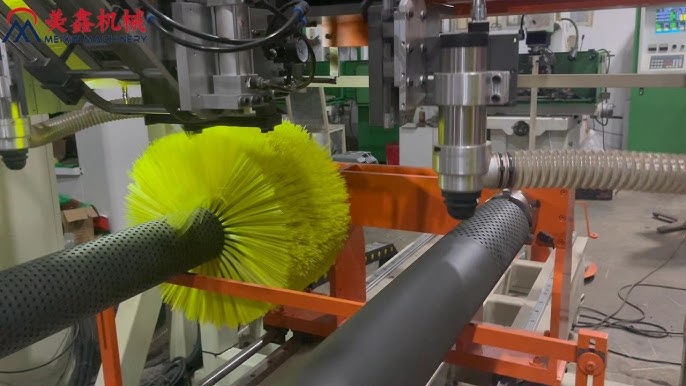

Choosing a high-quality industrial disc brush machine is important for manufacturers that need consistent production, reliable operation, and controlled manufacturing costs. A machine may look suitable based on its specifications, but its construction, accuracy, flexibility, and maintenance requirements should also be evaluated before purchase.
When comparing Industrial Disc Brush Machines For Sale, businesses should consider how well each machine matches their production requirements. Looking at several quality factors together can provide a clearer picture of the equipment’s long-term value.
Examine the Machine’s Construction
The overall construction of a machine can provide important information about its expected stability and durability. A solid structure can help reduce unwanted movement and vibration during operation.
Pay attention to the quality of the frame, mechanical assemblies, fixtures, and other major components. Equipment intended for continuous industrial use should be designed to withstand regular production demands.
Check Production Accuracy
Accuracy is one of the most important quality factors in disc brush manufacturing. Consistent bristle positioning, spacing, and density can directly affect the performance of the finished brush.
Ask how the machine maintains positioning accuracy during repeated production cycles. Reliable adjustment and control mechanisms can help reduce variation between batches.
Evaluate Brush Size Flexibility
A quality machine should provide the range of brush dimensions required by your business. Consider the disc diameter, thickness, center hole, and other specifications you expect to manufacture.
If your product range includes several sizes, adjustable equipment may offer greater flexibility. However, the adjustment range should be checked against your actual production requirements.
Assess Filament Compatibility
Different applications require different filament materials. Common choices include nylon, polypropylene, abrasive filaments, and wire.
Before purchasing, confirm that the machine is designed to handle the materials you need. A machine that cannot support your required filament types may limit your product range.
Review Production Speed
Production speed should be evaluated alongside accuracy and consistency. A machine that operates quickly but produces inconsistent brushes may create more waste and rework.
Consider whether the equipment can maintain acceptable quality at your target production rate. Adjustable speed settings can also be useful when manufacturing different brush specifications.
Consider Automation Features
Automation can improve repeatability and reduce repetitive manual tasks. Depending on the machine, automated functions may support material feeding, positioning, filling, drilling, trimming, or other production stages.
Evaluate whether these features provide meaningful benefits for your operation. The most advanced machine is not necessarily the best choice if its additional functions are unnecessary for your production process.
Inspect Ease of Operation
Machine controls should be clear and practical for operators. Straightforward adjustment procedures can make it easier to switch between production specifications and reduce training requirements.
Ask whether operators can easily monitor production settings and make routine adjustments. User-friendly operation can contribute to smoother day-to-day manufacturing.
Check Maintenance Accessibility
Maintenance requirements are another indicator of practical machine quality. Components that are easy to access for inspection, cleaning, lubrication, and replacement can help reduce service time.
Find out which parts require routine maintenance and whether replacement components are readily available. A well-designed machine should allow necessary servicing without excessive disruption to production.
Look for Reliable Safety Features
Safety should always be considered when evaluating industrial equipment. Appropriate guarding, emergency controls, and safe access to operating areas are important features.
Manufacturers should also ensure that the equipment can be installed and operated according to applicable workplace safety requirements. Operators should receive suitable training before using the machine.
Review Technical Documentation
Clear technical documentation can make equipment easier to install, operate, and maintain. Manuals should provide information about machine settings, routine maintenance, troubleshooting, and replacement procedures.
Detailed documentation can also help reduce dependence on outside assistance for basic operating and maintenance tasks.
Ask About Spare Parts and Support
Long-term machine quality is closely connected to the availability of replacement parts and technical support. Even reliable equipment may eventually require component replacement or servicing.
Before purchasing, ask about spare parts availability, service procedures, operator training, and technical assistance. This information can help you assess the machine’s practical long-term value.
Consider Total Cost of Ownership
Quality should not be judged by purchase price alone. Energy use, maintenance, spare parts, labor, downtime, and expected service life all contribute to the total cost of ownership.
A machine with a higher initial price may provide better value if it delivers consistent output and requires less frequent servicing. Comparing these factors can help avoid focusing too heavily on upfront cost.
Request a Demonstration When Possible
If possible, observe the machine operating before making a final decision. A demonstration can provide useful information about production speed, noise, vibration, controls, adjustment procedures, and finished brush quality.
Ask whether the machine can be tested using materials and brush specifications similar to your actual production requirements. This can provide more practical information than specifications alone.
Final Thoughts
Evaluating the quality of an industrial disc brush machine requires a comprehensive approach. Construction, production accuracy, brush size flexibility, filament compatibility, speed, automation, maintenance, safety, documentation, and technical support should all be considered.
Rather than choosing equipment based on price or a single specification, compare how well the complete machine fits your production process. Careful evaluation can help manufacturers select reliable equipment that supports consistent brush quality and efficient long-term operation.