
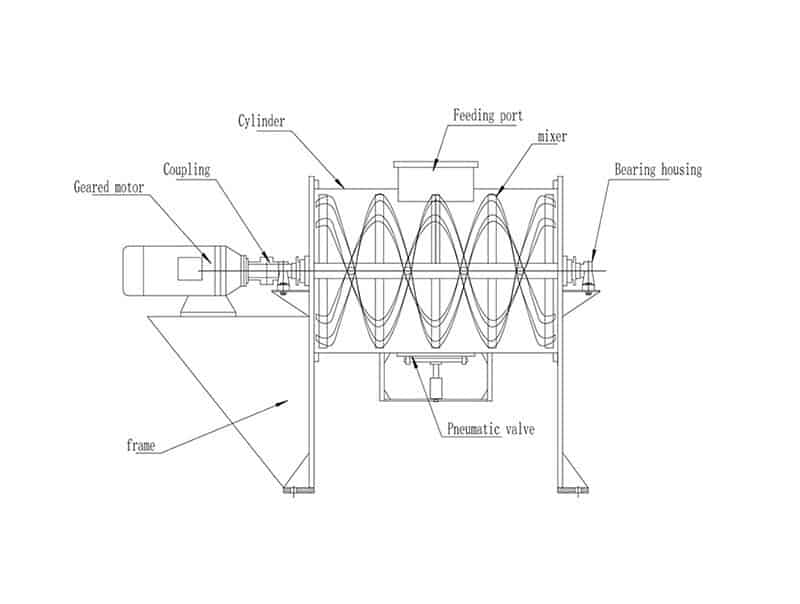

Maintaining consistent product quality is one of the biggest challenges in industrial manufacturing. When powders and granular materials are not mixed properly, variations in composition, performance, and appearance can affect the final product and overall production efficiency.
Using suitable mixing technology helps manufacturers achieve reliable results across different batches. Conical Mixers are widely used because their unique design promotes uniform material movement, reduces segregation, and supports precise blending for industries that require high-quality output.
The Importance of Uniform Powder Mixing
Uniform mixing is essential when multiple ingredients need to be combined accurately. Uneven distribution can create differences between batches and impact the performance of finished products.
Consistent blending helps manufacturers achieve:
- Accurate ingredient distribution
- Stable product characteristics
- Reduced batch variations
- Improved quality control
A reliable mixing process ensures that every batch meets the required standards.
How Conical Mixers Improve Blending Consistency
Conical mixers use a specially designed vessel shape and controlled mixing action to move materials effectively throughout the chamber. This movement allows powders and granules to combine evenly without excessive mechanical force.
The mixing process helps:
- Distribute particles more evenly
- Reduce unmixed areas
- Maintain consistent formulations
- Improve repeatability between batches
This makes conical mixers suitable for applications where product quality cannot be compromised.
Reducing Material Segregation
Powder segregation is a common issue in industrial processing. Differences in particle size, density, or material properties can cause ingredients to separate during handling and transportation.
Conical mixers help minimize segregation by maintaining controlled material circulation during mixing. This allows different components to remain evenly distributed throughout the production cycle.
Reduced segregation supports:
- Better product uniformity
- More reliable performance
- Fewer quality issues
- Improved customer satisfaction
Gentle Processing for Product Protection
Some materials require careful handling because excessive mixing force can damage particles or affect product properties. Conical mixers provide efficient blending while maintaining a gentle mixing environment.
This is especially beneficial for:
- Pharmaceutical ingredients
- Fine powders
- Sensitive formulations
- Specialty materials
Protecting material characteristics helps manufacturers maintain the intended quality of their products.
Supporting Accurate Formulations
Many industries depend on precise ingredient ratios to achieve the desired product performance. Even small inconsistencies in mixing can affect the final result.
Conical mixers support accurate formulations by providing:
- Controlled material movement
- Reliable blending performance
- Repeatable mixing cycles
- Consistent ingredient distribution
This accuracy is particularly important in industries with strict production requirements.
Improving Production Reliability
Consistent product quality depends not only on mixing performance but also on reliable equipment operation. A well-designed mixing system helps manufacturers maintain stable production processes.
Benefits include:
- Fewer production interruptions
- Predictable batch results
- Improved manufacturing efficiency
- Easier quality management
Reliable equipment allows businesses to maintain consistent output over time.
Applications Where Product Quality Matters
Conical mixers are commonly used in industries where precise blending is essential.
Pharmaceutical Manufacturing
Pharmaceutical producers require accurate mixing to ensure consistent formulations and meet strict quality standards.
Food Processing
Food manufacturers use powder mixing equipment to maintain uniform taste, texture, and ingredient distribution.
Chemical Production
Chemical industries rely on consistent blending for specialty compounds and dry formulations.
Advanced Materials
Manufacturers of technical materials use controlled mixing processes to achieve specific material properties.
Factors That Affect Mixing Quality
Although equipment design is important, several factors influence final mixing performance.
Key considerations include:
- Material properties
- Mixing time
- Batch size
- Operating speed
- Equipment maintenance
Optimizing these factors helps manufacturers achieve better results and maintain product consistency.
Maintenance for Long-Term Performance
Regular maintenance is necessary to keep mixing equipment operating effectively. Proper inspection and servicing help prevent performance issues that could affect product quality.
Maintenance practices include:
- Cleaning the mixing chamber
- Inspecting internal components
- Checking mechanical systems
- Replacing worn parts when needed
Well-maintained equipment provides more reliable and consistent operation.
Conclusion
Conical mixers play an important role in supporting consistent product quality across various industries. Their ability to provide uniform blending, reduce segregation, and handle materials gently makes them a valuable solution for manufacturers focused on reliable production. By combining suitable equipment selection with proper operation and maintenance, businesses can achieve better quality control and more efficient manufacturing processes.