
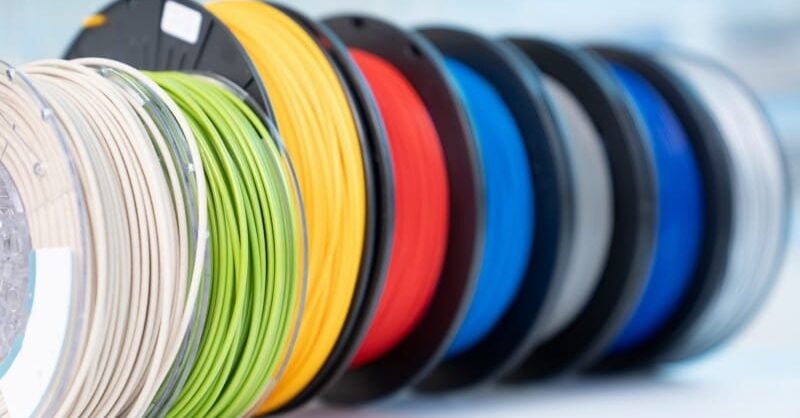

The world of additive manufacturing is evolving rapidly, and 3D printing filament is at the center of this transformation. What was once limited to basic plastics like PLA and ABS has now expanded into advanced engineering-grade materials designed for real-world performance. These innovations are reshaping industries such as aerospace, automotive, healthcare, and consumer product design.
Modern developments in 3D printing filament focus on improving strength, heat resistance, sustainability, and multifunctionality. As a result, filaments are no longer just printing materials—they are engineered solutions for complex applications.
Shift Toward Engineering-Grade Filaments
One of the biggest trends is the shift from basic plastics to high-performance engineering materials. Traditional filaments are being replaced or enhanced to meet industrial demands.
Carbon Fiber Reinforced Filaments
Carbon fiber composites are among the most important innovations in recent years. These materials combine polymers with short carbon fibers to improve stiffness and strength.
- Significantly higher rigidity
- Reduced weight for structural parts
- Improved dimensional stability
- Better heat resistance compared to standard filaments
Carbon fiber filaments are now widely used for functional prototypes and end-use parts where durability is critical.
High-Performance Polymers
Materials such as nylon, polycarbonate, and advanced PETG blends are increasingly used for industrial applications.
- High impact resistance
- Strong thermal stability
- Chemical resistance for harsh environments
- Suitable for mechanical and automotive components
These materials allow 3D printed parts to replace injection-molded components in some cases.
PETG-Based Innovations
PETG remains one of the most versatile materials, but recent advancements have improved its capabilities even further.
Carbon Fiber PETG (PETG-CF)
A major innovation is the addition of carbon fiber to PETG, which significantly enhances stiffness and reduces warping.
- Improved structural rigidity
- Matte surface finish for professional appearance
- Better dimensional accuracy
- Reduced deformation in larger prints
However, it becomes slightly more brittle compared to standard PETG, making it better suited for structural rather than flexible parts.
Glass Fiber Reinforcement
Glass fiber-filled filaments are also gaining popularity as an alternative to carbon fiber.
- Balanced strength and flexibility
- Improved wear resistance
- Cost-effective reinforcement option
These materials expand the range of applications for functional 3D printing.
Emerging Smart and Functional Filaments
Beyond mechanical improvements, filament technology is moving toward smart and functional materials.
Conductive and Sensor-Enabled Filaments
Researchers are developing filaments that can conduct electricity or act as sensors when embedded into printed structures.
- Used in wearable electronics
- Structural health monitoring systems
- Smart robotics applications
This enables 3D printed objects to become interactive and responsive systems rather than static parts.
Multi-Material and Composite Printing
New printer systems are supporting multiple filaments in a single build process, allowing complex material combinations.
- Flexible + rigid hybrid parts
- Color-changing and functional gradients
- Embedded electronic components
Recent consumer printer innovations are making multi-material printing more accessible to users.
Sustainability Trends in Filament Development
Environmental concerns are driving innovation in sustainable filament production.
Recycled Filaments
Manufacturers are increasingly producing filaments from recycled plastics, including PET-based materials.
- Reduced plastic waste
- Lower production costs
- Improved circular economy integration
Some systems even allow desktop recycling of filament waste for reuse in printing.
Bio-Based Materials
Bio-derived filaments made from renewable resources are also gaining traction.
- Lower environmental impact
- Suitable for prototyping and packaging
- Continued improvements in durability and heat resistance
High-Temperature and Industrial Filaments
Industries requiring extreme performance are adopting advanced high-temperature materials.
- Polycarbonate (PC) for impact resistance
- Nylon-based composites for mechanical strength
- Specialty blends for aerospace and automotive parts
These materials can withstand demanding conditions where traditional filaments fail.
Future Trends in 3D Printing Filament
The future of filament technology is moving toward greater integration of performance, intelligence, and sustainability.
Key Trends Include
- Stronger and lighter composite materials
- Increased use of AI-optimized print profiles
- Expansion of conductive and smart materials
- Wider adoption of recycled and eco-friendly filaments
- Multi-functional printing systems combining different materials in one part
These advancements are making 3D printing more capable of producing final-use industrial components.
Conclusion
Innovation in 3D printing filament is rapidly expanding what is possible in additive manufacturing. From carbon fiber composites to smart conductive materials and sustainable bio-based options, modern filaments are far more advanced than traditional plastics.
As technology continues to evolve, 3D printing filament will play an even greater role in manufacturing, enabling stronger, smarter, and more sustainable products across industries.