
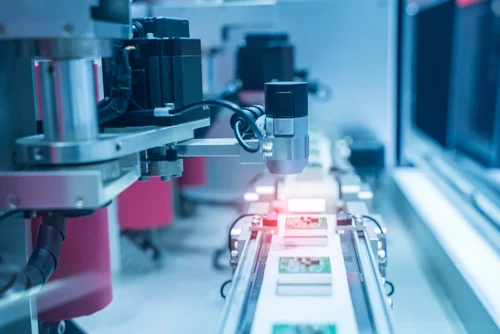

In today’s fast-paced manufacturing industry, maintaining product quality while keeping up with high production speeds is a critical challenge. Defects or inconsistencies can lead to costly rework, production delays, and customer dissatisfaction. To address these issues, companies are increasingly turning to High Speed Vision Inspection Systems, which offer fast, accurate, and automated monitoring of products on the production line.
Understanding High Speed Vision Inspection Systems
High speed vision inspection systems are automated technologies that use high-resolution cameras, advanced sensors, and intelligent software to detect defects in real time. Unlike manual inspection, these systems can handle rapid production environments without compromising accuracy. Many manufacturers incorporate a High Speed Vision Inspection Systems solution into their operations to ensure quality consistency even at high line speeds.
Real-Time Defect Detection
One of the main advantages of high speed vision inspection systems is their ability to detect defects immediately as products move along the production line. These systems can identify issues such as scratches, misprints, misalignments, and missing components. Early detection prevents defective items from advancing through the line, reducing waste and avoiding costly downstream problems.
Enhancing Efficiency in Rapid Production
In fast-paced manufacturing, even small delays can impact overall output. High speed vision inspection systems are designed to operate at production line speeds, scanning products in fractions of a second. By integrating these systems, manufacturers can maintain high throughput without sacrificing quality, achieving both speed and precision in demanding environments.
Reducing Waste and Production Costs
Defective products can result in material waste and higher operational costs due to rework and scrapped items. High speed vision inspection systems reduce these issues by ensuring that errors are identified immediately. This proactive approach minimizes waste, optimizes resource utilization, and contributes to more cost-effective manufacturing.
Supporting Regulatory Compliance and Safety
Many industries, including pharmaceuticals, food, and electronics, have strict regulatory requirements. High speed vision inspection systems ensure that products meet safety and quality standards consistently. By verifying compliance automatically, these systems help manufacturers avoid penalties, recalls, and potential harm to consumers.
Data-Driven Quality Management
Modern high speed vision inspection systems are equipped with robust data analytics capabilities. They track defect patterns, record inspection results, and generate detailed reports that provide valuable insights for process improvement. Manufacturers can use this data to refine production methods, enhance equipment performance, and maintain higher quality standards over time.
Flexibility and Integration
High speed vision inspection systems are highly adaptable, capable of inspecting a wide variety of products, materials, and sizes. They can be integrated into different stages of production, from assembly to final packaging. This flexibility allows manufacturers to maintain inspection accuracy without slowing down the production line, even in high-volume operations.
Conclusion
High speed vision inspection systems are essential for modern manufacturing environments where speed and quality cannot be compromised. By providing real-time defect detection, enhancing operational efficiency, reducing waste, and supporting regulatory compliance, these systems help manufacturers maintain high standards while meeting production targets. Implementing a high speed vision inspection system ensures reliable, consistent, and efficient output, making it a strategic investment for companies seeking to thrive in competitive markets.