
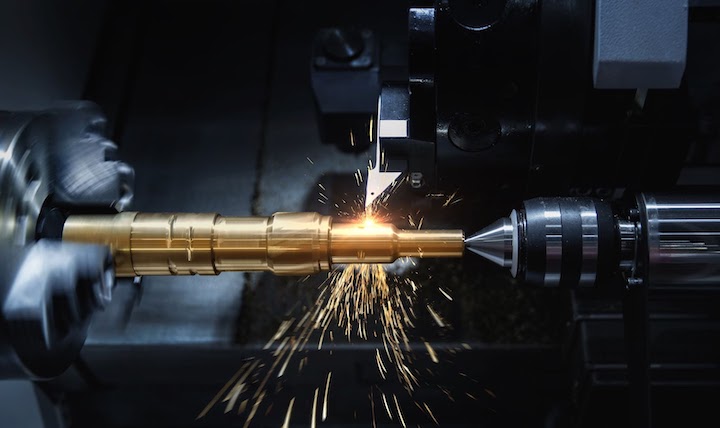

CNC (Computer Numerical Control) technology has revolutionized manufacturing by automating machining processes, improving precision, and increasing efficiency. Among the various types of CNC machines, 2 axis and 3 axis systems are the most common, each offering distinct capabilities and applications. Understanding the differences between a 2 axis CNC machine and a 3 axis CNC machine is essential for manufacturers, workshop owners, and engineers to make informed decisions about equipment investments and production strategies.
A 2 axis CNC machine operates along two primary axes: the X-axis for lateral tool movement and the Z-axis for longitudinal movement along the workpiece. This configuration is ideal for turning operations on cylindrical or symmetrical parts, such as shafts, bushings, and rollers. Many manufacturers rely on reliable systems such as the 2 Axis CNC Machine because they offer high precision, repeatability, and cost-effective operation for basic turning tasks. In contrast, a 3 axis CNC machine adds a third axis, typically the Y-axis, which allows for additional movement perpendicular to the X and Z axes. This enables more complex operations, such as contouring, pocketing, and machining non-cylindrical surfaces, making 3 axis systems suitable for a wider range of applications.
Structural and Functional Differences
The primary structural difference between 2 axis and 3 axis CNC machines lies in the number of controlled axes. A 2 axis CNC machine is limited to movements along the X and Z axes, which restricts it to turning operations where the workpiece rotates and the cutting tool moves in two directions. The simplicity of this design makes 2 axis machines easier to operate, maintain, and program, but they are not suitable for machining complex geometries.
On the other hand, a 3 axis CNC machine provides movement along X, Y, and Z axes, allowing the cutting tool to approach the workpiece from multiple directions. This additional axis enables milling, drilling, and contouring on flat or irregular surfaces. While 3 axis machines offer greater versatility, they also require more sophisticated programming and operator expertise. The added complexity can increase the initial cost and maintenance requirements, but it provides the ability to handle intricate parts that a 2 axis machine cannot produce.
Applications and Use Cases
A 2 axis CNC machine is most commonly used in industries that require high-precision cylindrical components. Automotive, aerospace, and general machinery manufacturing often rely on these machines to produce shafts, bushings, gears, and threaded parts. Their efficiency in performing repetitive turning operations makes them ideal for both small batch and mass production of standard rotational parts.
In contrast, 3 axis CNC machines are preferred in applications that require more complex shapes or multi-directional machining. Aerospace and defense industries, for example, use 3 axis systems to create intricate components like turbine blades, brackets, and enclosures. The electronics and medical sectors also benefit from 3 axis machining for parts that require precise contours, cavities, and holes. Essentially, while a 2 axis machine excels in turning operations, a 3 axis machine provides broader versatility for more complex parts.
Precision and Speed Considerations
Both 2 axis and 3 axis CNC machines provide high precision, but the 2 axis machine often achieves superior repeatability for cylindrical components due to its simpler design. Fewer moving axes reduce mechanical complexity, minimizing errors caused by vibration, backlash, or misalignment. This makes 2 axis machines particularly reliable for parts with tight tolerances and consistent surface finishes.
3 axis machines, while versatile, require careful programming and setup to maintain the same level of precision. The additional axis introduces more variables in tool movement, which can impact surface finish and dimensional accuracy if not properly managed. However, modern 3 axis machines with advanced controls and software have significantly improved in precision, making them capable of handling moderately complex parts efficiently.
Cost and Maintenance Differences
Cost is a significant factor when choosing between 2 axis and 3 axis CNC machines. A 2 axis CNC machine generally has a lower purchase price, lower maintenance requirements, and simpler operation. This makes it ideal for small workshops, startups, or manufacturers focusing on cylindrical parts and standard turning operations. The reduced complexity also leads to fewer potential breakdowns, lowering long-term operating costs.
A 3 axis CNC machine, due to its additional capabilities, comes with a higher initial investment. Maintenance is more involved, and operators require more training to program and operate the machine effectively. While the cost is higher, the ability to produce complex parts without additional setups can offset expenses for manufacturers who need to machine intricate components.
Conclusion
Choosing between a 2 axis CNC machine and a 3 axis CNC machine depends on your production needs, part complexity, and budget. A 2 axis machine is ideal for high-precision turning of cylindrical components, offering reliability, repeatability, and cost-effectiveness. In contrast, a 3 axis machine provides versatility to handle more complex geometries, including contouring, pocketing, and multi-directional milling. Understanding the structural differences, applications, precision capabilities, and cost considerations of each type allows manufacturers to select the right CNC system that aligns with their operational requirements and long-term production goals. For workshops focused primarily on turning operations, investing in a 2 axis CNC machine remains a practical and efficient choice.