
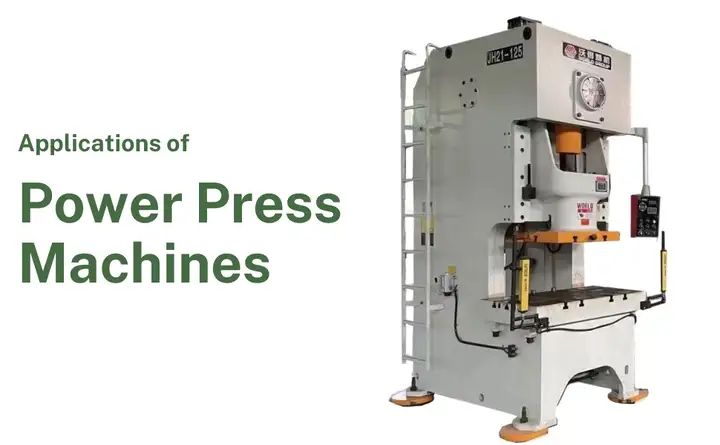

Press machines are an essential part of the manufacturing industry, used for operations such as punching, bending, forming, and cutting metal sheets. Depending on the scale and type of production, these machines can be designed for either heavy-duty or light-duty applications. Heavy presses are typically used for industrial operations that require high force and large-volume production, while light presses are more suitable for smaller-scale manufacturing, delicate materials, or precision tasks. Understanding how manufacturers design and produce these machines helps industries select equipment that matches their operational requirements.
A professional Press Machine Manufacturer develops both heavy and light presses by leveraging engineering expertise, material selection, precision machining, and rigorous quality control. By tailoring the machine design to the intended application, manufacturers ensure that each press delivers reliable performance, safety, and efficiency. Heavy-duty machines focus on strength and stability, while light-duty machines prioritize speed, flexibility, and precision, allowing manufacturers to meet a wide spectrum of industrial needs.
Heavy-Duty Press Machines
Heavy-duty press machines are designed for operations that involve large, thick, or high-strength materials. These machines are commonly used in industries such as automotive, construction, shipbuilding, and aerospace. Heavy presses require a robust frame, high-capacity flywheel or hydraulic systems, and reinforced ram and guide structures to withstand repeated high-force operations.
Key features of heavy-duty presses include:
- High tonnage capacity: Capable of handling thick metal sheets or large components.
- Durable construction: Reinforced frames and precision-guided rams for long-term operation.
- Advanced safety systems: Interlocks, emergency stops, and protective guards to ensure operator safety.
- Automation capabilities: Integration with robotic feeding, die handling, and programmable control systems for large-scale production.
Manufacturers focus on material selection, heat treatment, and precise machining to ensure that heavy-duty presses maintain structural integrity under prolonged use. Rigorous load testing and alignment verification are also critical to confirm that the machine can safely handle its rated capacity.
Light-Duty Press Machines
Light-duty presses, in contrast, are intended for smaller, more precise operations. They are commonly used in electronics, small metal parts fabrication, packaging, and assembly lines where speed and accuracy are more important than raw force.
Characteristics of light-duty presses include:
- Lower tonnage requirements: Suitable for thin metals and delicate components.
- Compact design: Space-efficient machines that can be integrated into smaller production areas.
- High-speed operation: Designed for quick cycles and repetitive precision tasks.
- Ease of customization: Adaptable to various production tasks with different die configurations.
Manufacturers optimize light presses for speed and accuracy, often incorporating pneumatic or servo-driven systems that allow precise control over force and stroke. These presses are engineered to minimize vibration and maintain repeatable performance for delicate or high-precision applications.
Material and Design Considerations
Whether producing heavy or light presses, manufacturers pay close attention to material quality and structural design. Heavy presses require thick, high-strength steel and reinforced guideways to manage high stress, while light presses focus on precision components and lightweight frames to ensure fast and accurate movement. In both cases, advanced CAD design, finite element analysis, and CNC machining ensure that components meet strict dimensional and performance standards.
Customization and Versatility
Many manufacturers offer customized press solutions to meet specific client requirements. Heavy-duty presses can be tailored with variable stroke lengths, tonnage adjustments, or hydraulic systems suited for specialized applications. Light-duty presses can be adapted for small-scale production lines, custom tooling, or high-speed automation integration. This flexibility allows manufacturers to provide solutions for diverse industrial operations while maintaining reliability and quality.
Quality Assurance and Testing
Quality assurance is essential for both heavy and light presses. Manufacturers conduct extensive inspections, load tests, and operational trials to ensure each press meets its design specifications. Safety features, alignment, stroke accuracy, and force distribution are thoroughly tested. Documentation and traceability are maintained to support maintenance, service, and compliance with industry standards.
Conclusion
Press machine manufacturers play a vital role in producing both heavy and light presses tailored to the demands of different industrial applications. Heavy-duty presses focus on strength, stability, and high-volume output, while light-duty presses prioritize speed, accuracy, and flexibility. A reputable Press Machine Manufacturer integrates advanced engineering, high-quality materials, precision machining, and rigorous quality assurance to deliver machines that meet these diverse requirements. Understanding these distinctions allows industries to select the right equipment for their production needs, ensuring reliability, efficiency, and long-term operational success.