
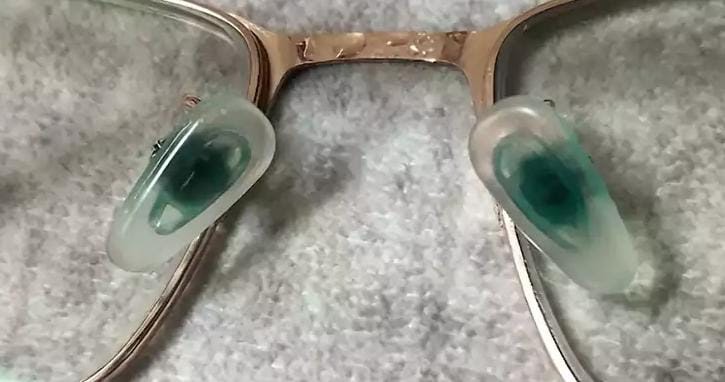

Green stuff on glasses usually forms because of oxidation, a chemical reaction that occurs when certain frame materials come into contact with moisture, sweat, air, or skin oils. It may also appear due to exposure to cosmetics, lotions, or humid conditions. Although the green discoloration may look concerning, it is generally harmless and can be cleaned easily with proper maintenance. Knowing the causes helps you prevent buildup and keep your eyewear in good condition for longer.
Many people notice green residue appearing on the nose pads, hinges, or temples of their frames. This issue commonly occurs when the base material reacts with oxygen and moisture, forming a green compound on the surface. According to experts discussing metal frame discoloration, the reaction is typically caused by oxidation rather than poor hygiene or low-quality eyewear.
Why Do Frames Develop Green Residue?
The green tint is often linked to chemical reactions between frame materials and environmental factors. Several conditions can accelerate this process.
Oxidation from Air and Moisture
When certain alloys are exposed to oxygen and humidity, they undergo a natural reaction that produces a greenish layer. This process is similar to what happens to copper over time. Moist environments increase the speed of this reaction, especially if frames are not dried properly after cleaning or exposure to rain.
Sweat and Skin Chemistry
Your body naturally produces sweat and oils, which contain salts and mild acids. When frames stay in contact with your skin throughout the day, these substances can trigger chemical changes on the surface. Individuals with more acidic sweat may notice discoloration faster than others.
Contact with Skincare and Beauty Products
Products such as sunscreen, moisturizers, perfumes, and makeup contain ingredients that may react with frame materials. When these substances transfer onto the frame surface, they can accelerate discoloration and residue formation.
Wear and Tear of Protective Coatings
Most frames are coated with a protective finish to prevent corrosion. Over time, friction from daily use, cleaning, and handling can wear down this coating. Once the protective layer weakens, the underlying material becomes more vulnerable to oxidation.
Is the Green Buildup Harmful?
In most situations, green buildup is not harmful to your health. It may leave temporary marks on your skin, but these usually wash off easily with soap and water. The discoloration is primarily a cosmetic issue rather than a medical concern.
However, some people may experience mild irritation if they have sensitivities to certain materials, such as nickel. If redness or itching occurs frequently, choosing hypoallergenic frame materials may help.
Effective Ways to Clean Green Residue
Cleaning frames regularly prevents buildup from becoming stubborn. Here are some safe methods to remove discoloration.
Gentle Soap and Water
Use lukewarm water with a small amount of mild soap. Gently scrub affected areas with a soft cloth or toothbrush. Rinse thoroughly and dry completely with a microfiber cloth to prevent moisture from lingering.
Baking Soda Solution
A paste made from baking soda and water can help remove oxidation. Apply gently and avoid excessive pressure to prevent scratches.
Diluted Vinegar Application
White vinegar can dissolve mineral buildup and oxidation. Apply it carefully with a cotton swab and rinse immediately afterward to protect coatings.
Professional Maintenance
If corrosion is severe or the frame finish is damaged, an optician can provide professional cleaning or refinishing.
How to Prevent Green Discoloration
Preventive care significantly reduces the chances of oxidation and keeps your eyewear looking new.
Clean Frames Daily
Wipe frames with a microfiber cloth at the end of the day to remove sweat and oils before they accumulate.
Keep Frames Dry
Always dry your frames after exposure to water or humidity. Moisture left on the surface can speed up chemical reactions.
Apply Products Before Wearing Frames
Use skincare or cosmetic products before putting on your eyewear. Allow them to absorb fully into your skin to minimize contact with frames.
Store in a Protective Case
Keeping your eyewear in a case protects it from humidity, dust, and environmental exposure when not in use.
Choose Quality Materials
Investing in high-quality materials such as titanium, stainless steel, or acetate can reduce the risk of discoloration. These materials are more resistant to corrosion and environmental damage.
The Science Behind the Green Color
The green color often comes from compounds formed during oxidation, particularly when copper is present in the alloy. Over time, exposure to oxygen and moisture creates a patina layer. While this patina may protect large objects like statues, it is undesirable on eyewear because of its appearance.
The speed of this reaction depends on environmental conditions, frequency of wear, and individual body chemistry.
Can Your Body Chemistry Influence Discoloration?
Yes, body chemistry plays a significant role. Factors such as diet, medications, and natural skin acidity can influence how quickly frames react with sweat. Some individuals naturally experience faster discoloration due to higher acidity levels in perspiration.
If you frequently notice green buildup, it does not necessarily mean your frames are poor quality. It may simply reflect how your body interacts with the material.
When Should You Replace Your Frames?
While occasional discoloration is manageable, replacement may be necessary if:
- The structure becomes weak or damaged
- Protective coating has worn off completely
- Hinges show corrosion or stiffness
- Skin irritation becomes persistent
Replacing worn frames ensures better comfort and durability.
Best Materials for Long-Lasting Frames
If you want minimal maintenance and better resistance to discoloration, consider these options:
- Titanium: Lightweight, strong, and corrosion-resistant
- Stainless Steel: Durable and less reactive to sweat
- Acetate: Non-metal material that does not oxidize
- TR90: Flexible and resistant to environmental damage
Choosing the right material can significantly reduce maintenance efforts and prolong the life of your eyewear.
Frequently Asked Questions
Why do frames turn green so quickly?
High humidity, frequent sweating, and contact with skincare products can accelerate oxidation.
Is the green residue mold?
No. The green color is typically caused by oxidation rather than mold or bacteria.
Can discoloration be stopped completely?
It may not be possible to stop oxidation entirely, but regular cleaning and proper storage can slow it significantly.
Does green buildup mean poor quality?
Not always. Even high-quality alloys can oxidize under certain environmental conditions.
Final Thoughts
Green stuff on glasses is a common issue caused by oxidation, moisture, sweat, and exposure to chemicals. While it may look unpleasant, it is usually harmless and manageable with proper care. Regular cleaning, keeping frames dry, and choosing corrosion-resistant materials can prevent recurring buildup.
By understanding the causes and following simple maintenance practices, you can extend the lifespan of your eyewear and keep it looking clean and comfortable for everyday use.