
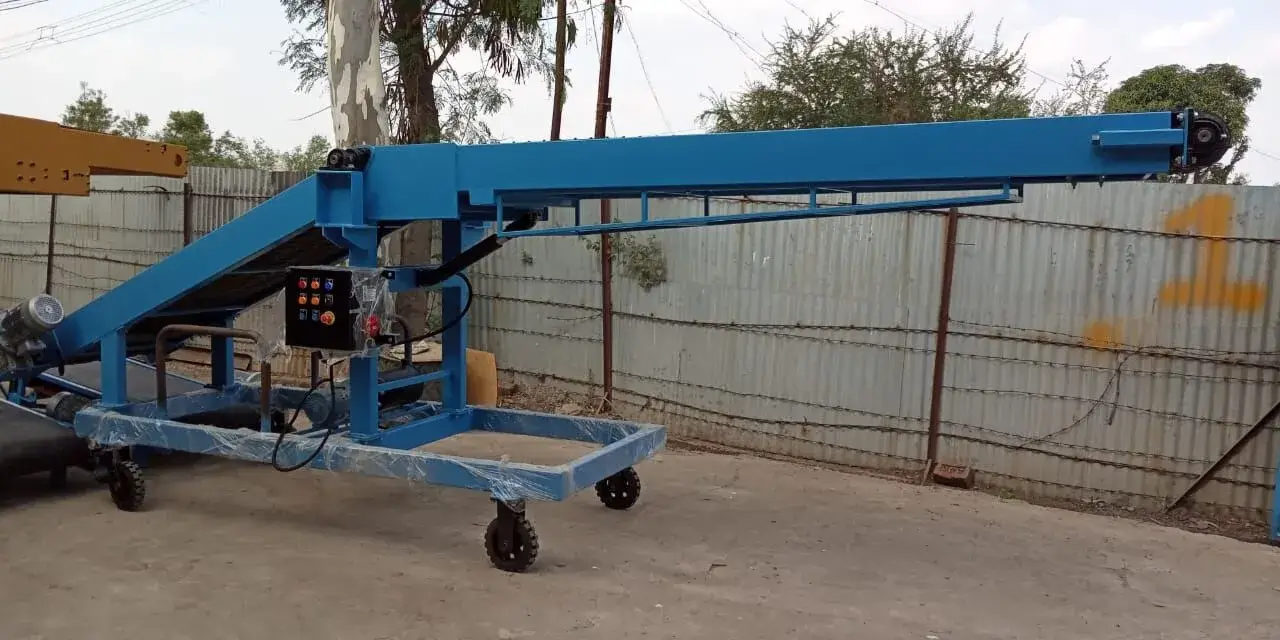

Truck loading conveyors are essential equipment in industries that handle bulk materials, such as mining, agriculture, construction, and manufacturing. They provide efficient solutions for transferring materials into trucks, improving productivity, reducing labor costs, and minimizing material spillage. As operations vary widely across industries, the ability to customize conveyor systems to meet specific operational needs has become a critical factor when selecting a manufacturer.
The range of materials, truck sizes, site layouts, and operational demands requires a tailored approach to conveyor design. High-quality Truck Loading Conveyor Manufacturers provide a wide variety of customization options to ensure that each system meets the unique requirements of their clients. For businesses seeking reliable, adaptable, and efficient solutions, exploring Truck Loading Conveyor Manufacturers offers access to systems designed with flexibility and performance in mind.
Adjustable Lengths and Heights
One of the most common customization options is the ability to adjust the length and height of the conveyor. Different trucks and loading areas may require conveyors to reach specific distances or heights for optimal material placement. Manufacturers offer telescopic or modular frame designs that allow operators to extend or retract the conveyor as needed. Adjustable height features ensure that materials are evenly distributed within truck beds, reducing the risk of overloading one side and improving operational efficiency.
Belt Type and Width Selection
The type of material being transported plays a crucial role in determining the appropriate conveyor belt. Manufacturers provide options for various belt materials, including rubber, PVC, and reinforced fabric, which are selected based on durability, abrasion resistance, and load capacity. Belt width can also be customized to accommodate different volumes of material. Wider belts are ideal for high-capacity operations, while narrower belts may be more suitable for smaller-scale applications or confined spaces.
Drive System and Power Options
Customization also extends to the conveyor’s drive system. Depending on the operational environment and energy requirements, manufacturers can provide electric, hydraulic, or diesel-powered drives. Variable speed drives allow operators to adjust the belt speed for precise material handling, while energy-efficient motors reduce operational costs. Some systems include automation features, enabling load monitoring and automatic start-stop functions to enhance productivity and safety.
Discharge Chutes and Material Flow Control
Precise material placement is critical when loading trucks to avoid spillage and ensure uniform distribution. Manufacturers offer customized discharge chutes that can be adjusted in height, angle, and position to match the specific truck configuration. Flow control mechanisms, such as gates or diverters, can be integrated to regulate the amount of material being discharged at any given time. These customization features reduce waste and optimize truck capacity.
Structural Modifications
In addition to functional customization, manufacturers can modify the conveyor structure to fit unique operational environments. This may include reinforced frames for heavy-duty applications, corrosion-resistant coatings for harsh environments, or compact designs for limited-space installations. Structural modifications ensure that the conveyor is not only effective but also durable and suitable for the site’s specific conditions.
Safety Features and Automation
Leading truck loading conveyor manufacturers integrate safety and automation features according to client requirements. Customizable options include emergency stop buttons, protective guards, sensors for material detection, and automated shut-off systems. These features enhance operational safety while also improving efficiency. Automation can be tailored to monitor truck fill levels, control belt speed, and coordinate multiple conveyors in complex operations, providing a fully integrated material handling solution.
Maintenance and Service Customization
Manufacturers also consider the ease of maintenance when offering customization options. Components such as belts, rollers, and motors can be designed for quick replacement or easy access, reducing downtime during repairs. Some manufacturers provide service packages or remote monitoring solutions that allow operators to track system performance and schedule preventive maintenance according to operational demands.
Conclusion
Customization capabilities offered by truck loading conveyor manufacturers allow businesses to achieve optimal performance, efficiency, and safety in their material handling operations. From adjustable lengths and heights to belt selection, drive systems, discharge chutes, structural modifications, and automation features, tailored solutions ensure that each conveyor meets the specific needs of the operation. By selecting a manufacturer that prioritizes customization, companies can improve productivity, reduce waste, extend equipment lifespan, and achieve a higher return on investment.