
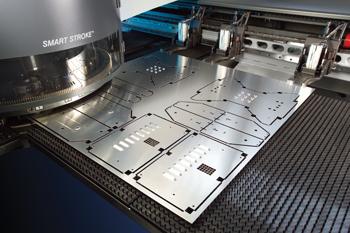

Punch press machines are critical tools in the manufacturing and metalworking industries, providing precise cutting, shaping, and forming of metal sheets. The performance, durability, and efficiency of these machines are largely determined by the materials and engineering practices employed during their design and production. Understanding the materials used and the engineering techniques applied by punch press machine manufacturers helps explain why these machines are capable of withstanding heavy workloads while maintaining accuracy and reliability.
High-Quality Material Selection
The selection of materials is one of the most important factors in the production of punch press machines. Manufacturers carefully choose metals and alloys that offer strength, durability, and resistance to wear. The machine frame is often constructed from high-grade steel to provide a solid, stable foundation capable of handling high-tonnage operations without deformation. Critical components such as shafts, gears, and die sets are typically made from hardened steel or alloy materials to ensure they can endure repeated stress and high-impact operations. By using premium materials, manufacturers extend the operational lifespan of the machine and reduce maintenance requirements, enhancing overall reliability. Many Punch Press Machine Manufacturers work closely with metallurgical experts to select the optimal materials for each component, balancing performance, cost, and durability.
Advanced Engineering Design
Material quality alone is not enough to ensure a high-performing punch press machine. Engineering design plays a pivotal role in achieving precision and longevity. Manufacturers use computer-aided design (CAD) and finite element analysis (FEA) to optimize the structural integrity of the machine. These tools allow engineers to identify potential stress points and adjust the design to minimize wear and prevent failure. Proper alignment of the ram, die, and bed reduces vibration and uneven force distribution, ensuring consistent cutting accuracy and extending the lifespan of components. Advanced engineering also includes thermal analysis to account for expansion and contraction, which can affect precision during prolonged operation.
Precision Machining and Component Fabrication
Once materials and designs are finalized, precision machining ensures that each part meets tight tolerances. CNC machines are commonly used to fabricate critical components with high accuracy, reducing the risk of misalignment or operational errors. Gear systems, cams, and slideways are carefully machined to ensure smooth operation and consistent performance. Additionally, surface treatments such as heat hardening, nitriding, or electroplating are applied to key components to enhance wear resistance, reduce friction, and prevent corrosion. These engineering practices contribute to the overall durability and reliability of the punch press machine.
Hydraulic and Mechanical Systems
Punch press machines rely on either mechanical or hydraulic systems, depending on the application. Mechanical presses use flywheels, gears, and crankshafts to deliver precise punching force, while hydraulic presses employ fluid power to provide adjustable and consistent pressure. Manufacturers engineer these systems to handle extreme forces and maintain accuracy over thousands of cycles. Advanced hydraulic systems often include pressure relief valves, safety interlocks, and precise control valves to prevent overload and ensure smooth operation. Mechanical systems are optimized for energy efficiency and consistent motion, combining durability with high operational performance.
Integration of Automation and Controls
Modern punch press machines often include automated features and electronic controls that require careful engineering integration. Programmable logic controllers (PLCs), sensors, and feedback systems allow operators to monitor machine performance in real-time and make adjustments as needed. These systems improve precision, reduce material waste, and prevent damage from improper operation. Engineering teams design control systems to integrate seamlessly with the mechanical and hydraulic components, ensuring reliable performance while enhancing operator safety.
Quality Assurance and Testing
Even with high-quality materials and advanced engineering, thorough testing is essential to ensure reliability. Manufacturers perform extensive quality control procedures, including load testing, cycle testing, and inspection of critical tolerances. Components are evaluated under simulated operational conditions to confirm their strength, durability, and alignment. This attention to detail ensures that each punch press machine meets stringent industry standards and can operate effectively in demanding industrial environments.
Continuous Innovation in Materials and Engineering
Punch press machine manufacturers invest in research and development to improve materials and engineering techniques. New alloys, composite materials, and surface treatments are explored to enhance wear resistance and reduce maintenance. Engineering innovations such as vibration damping, optimized frame geometry, and advanced control systems continue to improve machine precision and durability. This commitment to innovation ensures that manufacturers can provide machines capable of meeting evolving industry demands.
Conclusion
The durability, precision, and efficiency of punch press machines are the result of careful material selection and advanced engineering practices. Punch press machine manufacturers combine high-quality metals, precision machining, hydraulic and mechanical system design, automation integration, and rigorous testing to produce machines that deliver reliable performance under demanding conditions. By continuously improving materials and engineering techniques, manufacturers ensure that these machines remain a vital part of modern manufacturing processes, providing long-lasting, accurate, and safe operation for their users.