
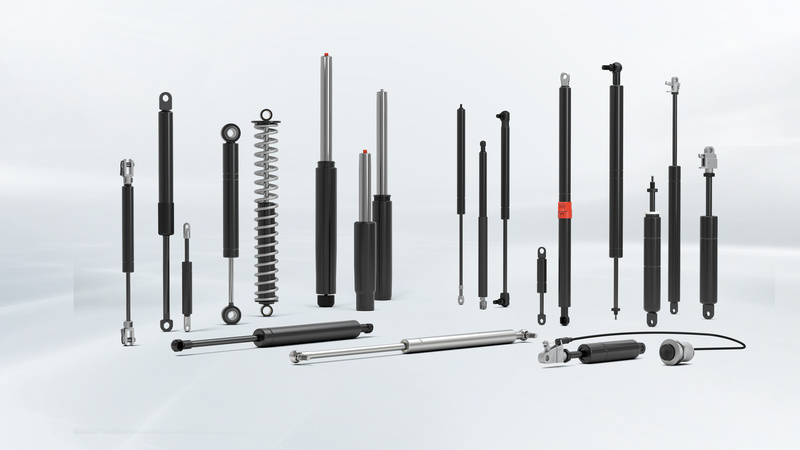

Gas springs are widely used in furniture, automotive, industrial machinery, and medical equipment due to their ability to provide controlled motion and support. However, their effectiveness and safety depend heavily on the precision and quality maintained during manufacturing. A Gas Spring Manufacturer plays a vital role in ensuring that these components are reliable, safe, and durable in real-world applications.
The foundation of safety and reliability begins with careful material selection and engineering. High-quality steel, alloys, and seals are chosen to withstand internal pressures and environmental conditions. Gas Spring Manufacturer implement strict quality standards from the initial design to final assembly. Every gas spring undergoes precise calculations to determine load capacity, stroke length, and damping characteristics, ensuring that it performs consistently under its intended application.
Rigorous Testing for Safety
Testing is central to producing safe gas springs. Manufacturers conduct load and force assessments to verify that each spring provides the correct support and motion control. Incorrect force can lead to uncontrolled movement or component failure, which can be dangerous in applications like vehicle hoods, office chairs, or medical devices. By rigorously testing each unit, manufacturers reduce the risk of malfunction and ensure predictable, safe performance.
Endurance and cycle testing is also essential. Gas springs must operate smoothly over thousands of cycles without significant wear or performance degradation. This type of testing helps manufacturers identify potential weaknesses early in the production process, preventing failures during actual use. It ensures that users can rely on the gas spring for extended periods, even in high-frequency applications.
Environmental and Stress Evaluations
Gas springs are often exposed to challenging environmental conditions, including extreme temperatures, humidity, and corrosive surroundings. Manufacturers simulate these conditions to test the gas spring’s resilience. Environmental testing evaluates the durability of seals, coatings, and lubrication, ensuring that the product maintains its performance and safety across different climates and industrial environments.
Temperature stress tests are particularly important for applications in vehicles, outdoor machinery, or industrial settings. A gas spring that fails under extreme heat or cold can compromise safety and functionality. By performing these evaluations, Gas Spring Manufacturers deliver products that maintain controlled motion and support regardless of environmental stress.
Functional Inspections and Precision
Beyond material and environmental testing, functional inspections ensure that each gas spring operates smoothly and safely. Stroke length, damping, and force consistency are measured meticulously. Any irregularities in motion, unexpected noise, or binding can indicate potential hazards. These inspections guarantee that the gas springs deliver a predictable user experience and prevent accidents caused by malfunctioning components.
Precision in assembly is equally important. Proper alignment of internal components and accurate gas charging ensure that the spring behaves as designed. Even minor deviations can affect motion control, leading to unsafe operation. By maintaining strict manufacturing tolerances, manufacturers minimize these risks.
Contribution to End-User Safety
The safety and reliability of gas springs directly impact the users of products and machinery that incorporate them. Whether supporting a heavy cabinet door, automotive trunk, or hospital bed mechanism, a well-manufactured gas spring prevents sudden movements, reduces the risk of injuries, and ensures smooth operation. Gas Spring Manufacturers play an invisible yet essential role in maintaining this level of protection, enabling designers and engineers to create safe, functional, and durable products.
Conclusion
A Gas Spring Manufacturer ensures safety and reliability through rigorous material selection, precise engineering, comprehensive testing, and meticulous assembly practices. From environmental evaluations to functional inspections, every step of the manufacturing process is designed to guarantee consistent performance and long-term durability. By adhering to these high standards, manufacturers provide end users with gas springs that are dependable, safe, and capable of performing under a wide range of applications, making them a critical component in modern design and engineering.