
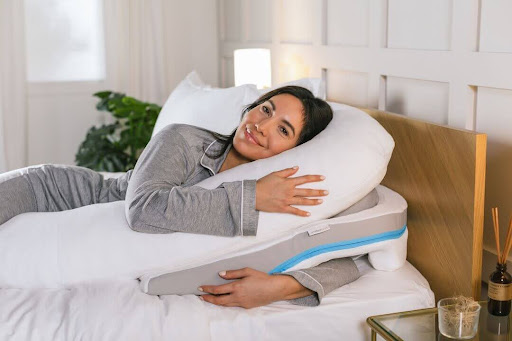

Neck pain can turn a good night into a long, restless one. But if you sleep on your side using the right pillow, it can make a big difference. A good pillow lifts your head, supports your neck, and matches the width of your shoulders.
When that support is off, your muscles work all night, and you wake up stiff or sore. The right pillow helps your body relax so you can fall asleep more easily and wake up feeling better. You don’t need any fancy gadgets. You just need a pillow that suits your body.
In this article, you’ll learn what to look for in a pillow if you’re a side sleeper with neck pain and how to find one that truly fits you.
Start with Alignment
The goal of sleeping with a pillow is straightforward. Keep your head, neck, and spine in one straight line. The best pillow for side sleepers and neck pain is the one that keeps your head level with your spine while filling the space between your ear and your outer shoulder. When that space is filled, muscles can rest. Your chin should be level, not tucked or tilted. If your head tips up, the pillow is too high. If it drops toward the mattress, it is too low.
Quick alignment check
- Lie on your side in your usual sleep spot.
- Ask someone to stand behind you and look at your head and neck.
- Your nose should point straight ahead, and your neck should look straight, not bent.
- If your ear sits above your shoulder line, your pillow is likely too high. If it sits below, you probably need more loft or a firmer pillow.
Pick the Right Loft and Firmness
Loft is just a word for pillow height. Side sleepers usually need a medium to high loft to fill the space from ear to shoulder.
Firmness also matters:
- Too soft: your head sinks over time, bending your neck.
- Too firm: your neck can’t relax into the pillow.
How to size your loft at home
- Stand tall with your back against a wall.
- Measure from the base of your neck to the outer tip of your shoulder. That number is a good starting point for pillow height.
Then adjust based on your bed and body:
- Softer mattresses let your body sink in more, so you may need a slightly lower pillow.
- Firmer mattresses keep you higher, so you might need a bit more loft.
- Heavier bodies tend to sink deeper into the mattress and may do well with slightly less loft.
- Petite bodies often need a bit more loft to fill the ear-to-shoulder gap.
Choose Materials That Hold Their Shape
Different pillow fillings behave differently throughout the night. Look for something that keeps a steady height instead of going flat.
Here are some common options:
- Solid memory foam
Choose it because it molds to your head and neck and spreads out pressure. Holds its shape well but can feel warm in some rooms.
- Latex foam
Bouncy and springy. Keeps its height and quickly adjusts when you move. Often feels a bit firmer at the surface.
- Shredded memory foam or mixed fibers
Lets you add or remove filling to get the right loft. Very adjustable, but may need fluffing now and then.
- Buckwheat hulls
Move and settle like sand to cradle your neck, then stay in place. They’re breathable and firm. A gentle rustling sound is normal.
- Water or water-core pillows
You can change the firmness by adding or removing water. They usually stay stable through the night.
Shape Matters Too
The shape of the pillow also affects how your neck feels.
- Contour cervical pillow: Has raised edges and a dip in the middle for your head. Designed to support the natural curve of your neck when you sleep on your side.
- Gusseted rectangle: Looks like a regular pillow but has taller side walls. This helps keep a flatter, more even surface. Good if you like a classic shape but need more height.
- Adjustable-fill pillow: Has a zippered cover and loose filling inside, so you can add or remove material. Ideal if you’re not sure what loft works best or if your shoulders are slightly uneven.
Conclusion
Neck pain doesn’t have to ruin your sleep. When your pillow fills the ear-to-shoulder gap and keeps your chin level, your neck can finally relax. Most side sleepers do well with a medium to high loft that stays steady through the night.
Focus on how the pillow fits your body, not on ads or buzzwords. Try a contour pillow if you need more neck support, or an adjustable-fill pillow if your shoulders are different or you’re still experimenting. Add a small knee pillow if your hips or lower back feel tight.
Pay attention to how you feel in the morning. If you wake up with less stiffness and fewer aches, you’re on the right track. Keep what works, adjust what doesn’t, and enjoy calmer nights and easier mornings.